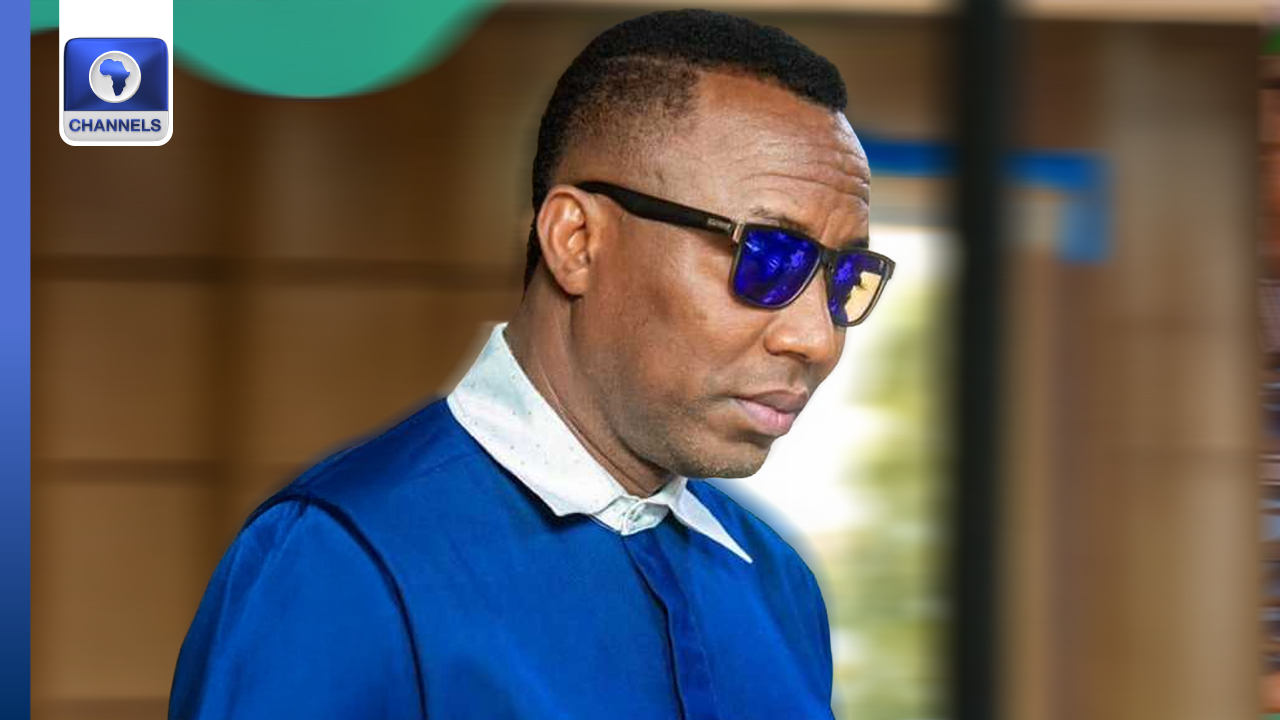
Justice Mohammed Umar of the Abuja Federal High Court on Tuesday granted Omoyele Sowore bail on self-recognition, cautioning him to refrain from making any utterances that could incite the public against President Tinubu.
Sowore’s bail followed his arraignment by the Department of State Services (DSS) before the court on a five-count charge bordering on alleged cybercrime.
In the five-count charge, Sowore is accused of allegedly making derogatory remarks about President Tinubu on his social media handles.
Sowore, who is the convener of the the convener of the #RevolutionNow movement, pleaded not guilty to the charges after they were read to him.
READ ALSO: DSS Sues Sowore, X, Meta Over Post About Tinubu
Earlier in the proceedings, his counsel, Marshall Abubakar, had raised a motion challenging the competence of the suit, arguing that the court lacked jurisdiction.
The prosecution objected, stating they had only just been served with the processes and needed time to respond.
In a short ruling, Justice Umar held that the objection on jurisdiction was not ready for hearing because the prosecution was served that morning, adding that the defendant needed to give them adequate time to file a counter-affidavit.
He then directed that the charges be read to the defendant.
After Sowore pleaded not guilty, his counsel applied for bail on self-recognition.
The prosecution opposed the application, arguing that Sowore posed a flight risk.
Justice Umar, in ruling on the bail request, granted Sowore bail on self-recognition and adjourned the matter to January 19, 2026, for trial.
After the DSS filed a case against him in September over his social media posts about Tinubu, Sowore responded by filing a counter-suit against the DSS, Meta, and X.
Sowore had said that the lawsuits were filed to challenge what the lawyers described as ‘unconstitutional censorship’ against his accounts maintained with Meta and X.
His lawyer Tope Temokun had said that the lawsuit states categorically that this is about the survival of free speech in Nigeria, adding that “if state agencies can dictate to global platforms who may speak and what may be said, then no Nigerian is safe, their voices will be silenced at the whims of those in power.”
“Censorship of political criticism is alien to democracy. The Constitution of the Federal Republic of Nigeria, in Section 39, guarantees every citizen the right to freedom of expression, without interference. No security agency, no matter how powerful, can suspend or delete those rights.”