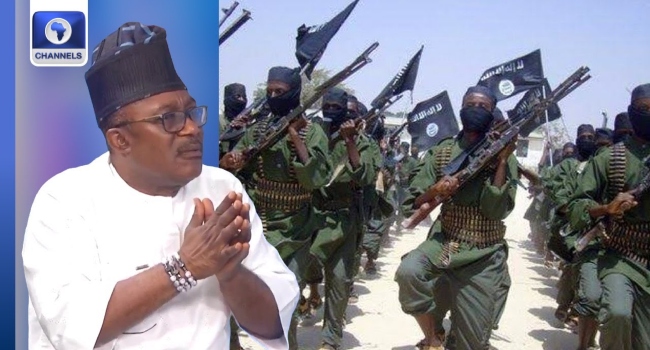
Ebenezer Obadare, the Douglas Dillon Senior Fellow for Africa Studies at the Council on Foreign Relations, has warned that Nigeria cannot overcome its worsening insecurity without a deliberate and uncompromising strategy to neutralise Boko Haram.
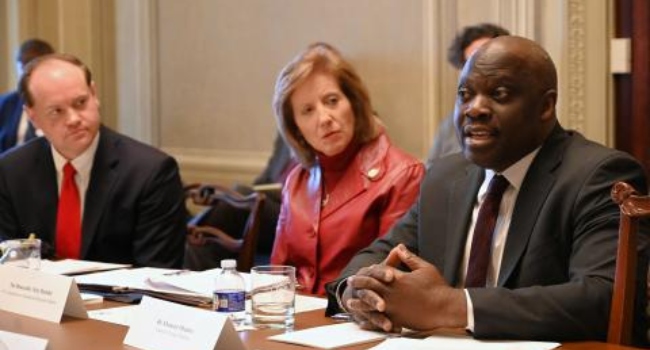
Obadare spoke at a joint congressional briefing convened by the US House Appropriations Committee and the House Foreign Affairs Committee on Tuesday, as lawmakers investigate rising religious persecution and targeted killings of Christians in Nigeria.
He proposed a two-fold US policy approach: “Work with the Nigerian military to neutralise Boko Haram, and Press Abuja to reform domestic laws by making Sharia law unconstitutional in the twelve northern states that adopted it since 2000 and disbanding Hisbah groups enforcing Islamic codes on non-Muslim citizens.
Obadare told lawmakers that Nigeria’s instability is tied directly to the activities of extremist groups, chief among them Boko Haram.
According to him, Nigeria cannot overcome its worsening insecurity without a deliberate and uncompromising strategy to neutralise Boko Haram, describing the jihadist sect as “the deadliest and most serious threat confronting the Nigerian state today.”
“The deadliest and most serious threat confronting the Nigerian state today is jihadist terror, perpetrated by the Islamist group Boko Haram,” he said.
“Boko Haram translates to ‘Western education is forbidden.’ Boko Haram’s barbarous and implacable campaign to overthrow the Nigerian state and establish an Islamic caliphate in its stead is the source of Nigeria’s present discontents.”
RELATED
It’s Shameful Our Senators Play Politics While US Congress Takes Action On Killings — Bakare
Insecurity: US Lawmakers Accuse Nigerian Govt Of Failing To Stop Killings
According to him, any attempt to resolve Nigeria’s security breakdown that does not prioritise the decisive degradation of Boko Haram “is a non-starter.”
The CFR scholar urged the United States to intensify diplomatic and strategic pressure on the Nigerian government, arguing that recent shifts in Abuja’s response to insecurity were triggered by credible international pressure.
“As recent events have shown, the Nigerian authorities are not impervious to incentives. Since the country’s Country of Particular Concern (CPC) designation and President Trump’s threat of unilateral military action against Boko Haram, President Tinubu has made several moves, including ordering air strikes against Boko Haram targets, the recruitment of an additional 30,000 policemen, and, most recently, declaring a national security emergency in the country.”
The briefing followed President Donald Trump’s 31 October directive instructing the House Appropriations Committee to investigate the massacre of Christians in Nigeria and present detailed recommendations to the White House.
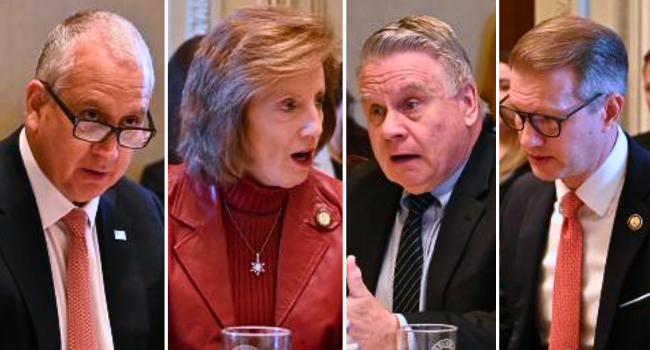
House Appropriations Vice Chair and National Security Subcommittee Chairman, Mario Díaz-Balart, led the session alongside Representatives Robert Aderholt, Riley Moore, Brian Mast, and Chris Smith. Foreign relations and religious freedom experts, including CFR’s Obadare, Vicky Hartzler of the US Commission on International Religious Freedom, and Sean Nelson of ADF International, provided updates and proposed policy responses.
The committee is preparing a comprehensive report to the President on how Congress can support efforts to curtail religious persecution and restore security in Nigeria.