Nigeria is now a global reference point for the implementation of its economic reforms and their resultant impacts, according to the World Bank Group, which last week sent a delegation to the country.
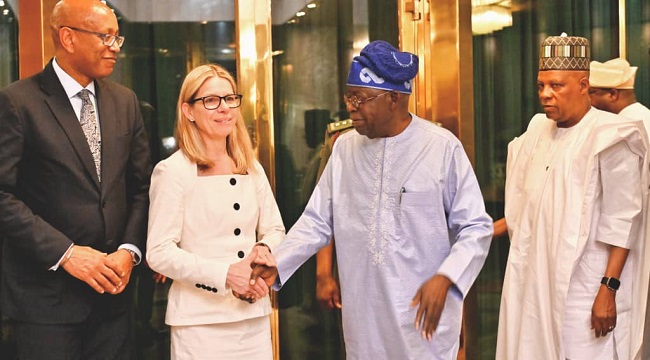
“Nigeria is a frequent example in my discussions with people around the world—presidents, policy makers, and investors—because I think in these two years, the results that have been achieved are really commendable,” the Managing Director of Operations at the bank, Anna Bjerde, said during a visit to President Bola Tinubu at the State House in Abuja.
Since taking over the reins of leadership in May 2023, President Tinubu has embarked on a raft of reforms, including the removal of the fuel subsidy and the unification of the exchange rate window, among others. The moves were criticised by opposition leaders, who argued that the sharp impacts of the reforms have pushed millions of Nigerians to the brink.
‘Steady Direction’
However, Bjerde said the implementation of the reforms, coupled with the results, is a subject of discussion among global leaders, investors, and policymakers. She acknowledged the difficulties in pushing for and implementing the reforms but praised the Federal Government’s commitment to seeing them through.
“What I have particularly appreciated and followed is your steady direction that you communicate to the people of Nigeria, as well as outside of Nigeria, of the importance of the reforms,” Bjerde told Tinubu.
“Even when reform implementation is difficult, there is no turning back. You are staying the course because it is what’s needed to get the results that you’re looking for.”
Upon assumption of office, President Tinubu’s government targeted transforming Nigeria into a $1 trillion economy by 2030. In July 2024, it launched an operating model and framework for Economic and Financial Inclusion to hit that milestone.
The World Bank says it would retool its budget to align with that dream, which it stated resonates with its economic vision.
“Under Ajay Banga’s leadership, he wants these strategies to be truly anchored in your vision for your country,” Bjerde said. “So, a $1 trillion GDP and 7% growth—that for me now becomes the operating framework that we need to work with. How do we contribute to that vision?”
According to Bjerde, the bank is particularly focused on the creation of jobs, especially given the rising youth population in Nigeria and across the continent. “I’m very bullish on this continent,” she said, noting that by 2050, one in four people will be African, with 40% of that number being young people.
“Jobs are what we’ve identified as something very important. As a result, we’re seeking job creation—jobs that allow people to have upward mobility because the best way out of poverty ultimately is that people have their own livelihoods and incomes,” the World Bank director said.
Tinubu Seeks Support

Responding to this, President Tinubu referenced Nigeria’s vast arable land as the primary canvas for these jobs. He asked the World Bank to go beyond high-level strategy into direct support for Nigeria’s farmers.
Tinubu said, “Nigeria is the heart of the continent, and it is necessary for us to do what is necessary to strengthen the economy, particularly looking at the young population of this country and looking at the vast area of arable lands. How do we employ mechanization and make agriculture easier?
“I’ve embarked upon that—there have been zonal mechanization centers to help the farmers. Now that our petrochemical industry is getting good output, how do we help the farmers to convert the local market for fertilizers to improve their yields and move them from ordinary small-scale holders to huge cooperatives and confident farmers that can bring opportunity to Nigerians?”
‘Painful, Difficult’
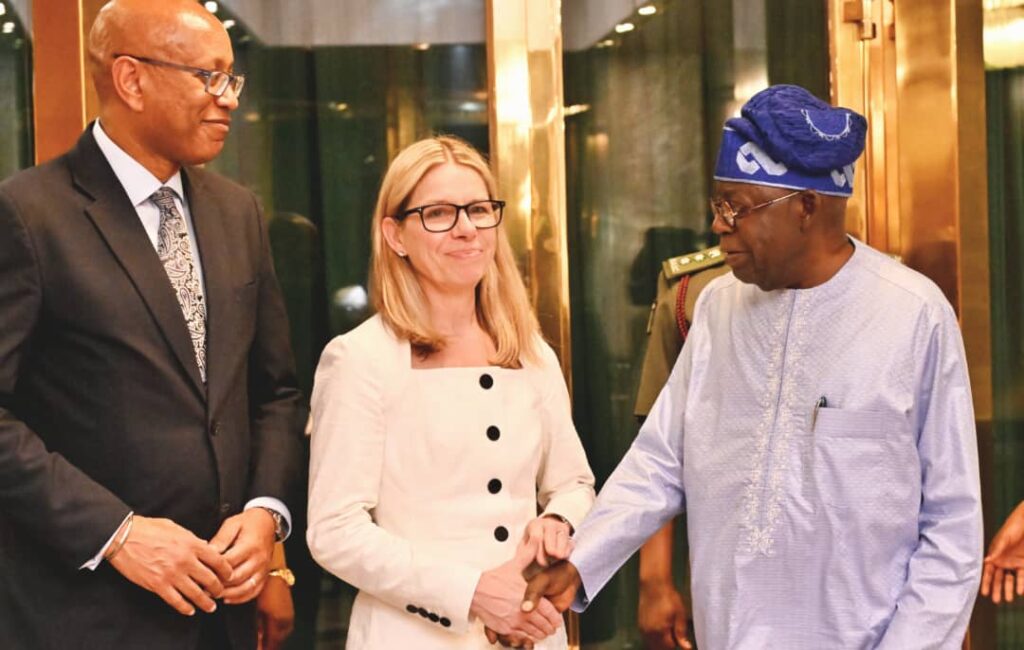
Beyond agriculture, the president also addressed the “painful and difficult” nature of his government’s reforms, likening the process to a one-way path. “Since we have gone into this tunnel of reform, we have our hands on the plow, and we’re never going to look back,” the former Lagos governor told the delegation.
The president asked the bank to accelerate its support and cut through bureaucracy to match the urgency of Nigeria’s $1 trillion economy vision.