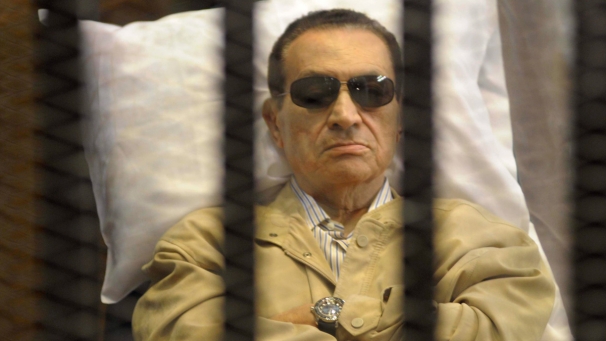
 Former Egyptian President, Hosni Mubarak, has been sentenced to three years in prison after a court found him guilty of embezzling public funds.
His two sons, Alaa and Gamal, were also convicted and given four-year terms.
The three were also fined three million dollars and ordered to repay the 17.6 million dollars they were accused of stealing.
Eighty-six year old Mubarak is also on trial for abuse of power and conspiring in the killing of protesters during the 2011 uprising that forced him to resign.
He was found guilty of the charge relating to the protesters in 2012 along with former Interior Minister, Habib Al-adly and sentenced to life in prison.
But in January 2013 the Court of Cassation upheld an appeal by the two men against their convictions on technical grounds and ordered a retrial.
Mubarak has been under house arrest at a military hospital since August pending retrial in a case of complicity in killings protesters during the 2011 revolt. He is further accused in two other cases of corruption that have yet to reach court.
“He (Mubarak) should have treated people close and far from him equally,” Judge Osama Shaheen said, as Mubarak watched from a cage flanked by sons Gamal and Alaa.
“Instead of abiding by the constitution and laws, he gave himself and his sons the freedom to take from public funds whatever they wanted to without oversight and without regard.”
Mubarak spent 23 months in jail from the uprising until August 2013, when he was transferred to house arrest.
It was not immediately clear how much of that time served would be applied against Wednesday’s sentence, but Reuters quoted judicial sources as saying that Mubarak is not expected to serve the entire three years as punishment for the corruption charges.
They said his sons, who have already done three years in jail, will also probably not serve their complete sentences. Four other defendants were acquitted.
Mubarak’s former military intelligence boss, Abdel Fattah al-Sisi, is poised to be elected president next week in a vote that could boost the legitimacy of a military-backed government.