Every morning, more than a billion people across the Global South begin their workdays not in office towers—but on the road. They transport goods. Deliver food. Carry passengers. They move our economies. And in doing so, they also contribute—unintentionally—to one of the greatest challenges of our time: climate change.
Mobility is a climate problem. But if we approach it with the right tools and inclusive thinking, it can also become one of the world’s most powerful economic opportunities.

Transport Emissions Are Hiding in Plain Sight
Globally, the transportation sector accounts for nearly 25% of energy-related CO₂ emissions—and in many fast-growing cities across Africa, Asia, and Latin America, that number is even higher. But the bulk of this pollution doesn’t come from private jets or SUVs—it comes from two- and three-wheelers, informal taxis, and aging trucks used for commerce and everyday survival.
In cities like Lagos, Kampala, and Dhaka, internal combustion engine (ICE) vehicles dominate mobility. They’re cheap to acquire but expensive to run, especially as fuel prices rise and inflation squeezes incomes. They also produce high levels of CO₂, black carbon, and nitrogen oxides—damaging both air quality and health.
But what makes this even more urgent is that the demand for mobility is only increasing. Africa’s population is projected to double by 2050. Urbanization is accelerating. Logistics is booming. If we don’t rethink how mobility works—and who it works for—we risk locking billions into a dirty, inefficient system.
The Missed Opportunity: Decarbonising for the Majority
The global EV conversation tends to focus on electric cars, public buses, and charging stations. But the real opportunity for impact lies in electrifying informal and small-scale transport, especially in emerging economies.
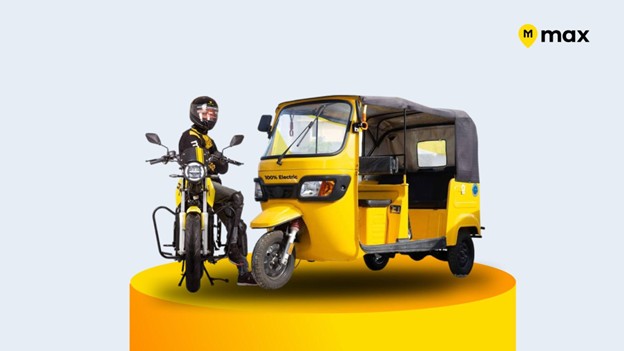
At MAX, we’ve learned that when you electrify the vehicles used by gig workers, delivery riders, and rural transporters, you unlock a threefold benefit:
Take Nigeria, for example. Since launching our electric mobility platform, MAX riders have collectively avoided over 8,874 tonnes of CO₂e emissions. Through our inclusive financing model, we’ve created over 55,000 jobs while enabling riders to earn up to 60% more than their petrol counterparts.
That’s not just green—it’s transformative.
The Barrier Isn’t Demand—It’s Access
The challenge isn’t that people don’t want cleaner vehicles. It’s that they can’t afford them.
In most low-income markets, vehicle financing is virtually nonexistent. Commercial lending rates can exceed 25%. Credit access is limited. And subsidies—where they exist—are designed for the formal economy. That’s why we built a model at MAX that reflects the realities of the people we serve:
This model flips the narrative: instead of expecting the poor to prove their creditworthiness, we design for their resilience—and back it with data.
And it’s not just MAX. Companies like Ampersand in Rwanda, BasiGo in Kenya, and SMV Green in India are proving that micro-mobility electrification is economically viable and environmentally essential—when you pair the right tech with the right financing.
Climate Policy Must Catch Up with Climate Reality
Despite this progress, most climate finance still flows to large infrastructure projects and corporate fleets. Meanwhile, the informal mobility sector—used by billions daily—remains largely overlooked.
To truly scale clean mobility, we need:
Climate justice is not only about who bears the brunt of global warming—it’s also about who benefits from the solutions.
What the Future of Mobility Should Look Like
A world where:
This is not hypothetical. It’s already happening—just not fast enough.
Conclusion: A New Road to Shared Prosperity
We can’t afford to treat mobility as a footnote in climate discussions. It is both a root cause and a ready solution. With the right innovation, capital, and policy frameworks, mobility can shift from being the engine of emissions to the engine of equity.
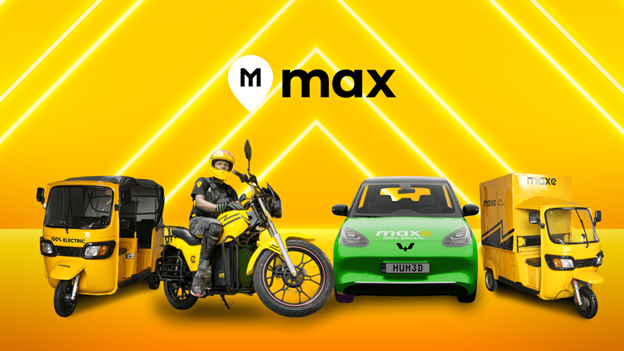
At MAX, we’re not just building electric vehicles. We’re building access, inclusion, and economic dignity—one ride at a time.
We call on:
We’ve proven that the right financing model can unlock the future—not someday, but today.
The road ahead isn’t just open—it’s electric. The only question is: who has the courage to accelerate?
This article was written by Chinedu Azodoh, the Co-Founder and President of MAX. MAX is on a mission to make mobility in Africa safer, smarter, and greener—by putting electric vehicles, clean energy, and economic opportunity in the hands of everyday people through affordable, accessible and convenient mobility. At MAX, every ride empowers.