Nigeria has announced a renewed focus on domestic resource mobilisation and reduced reliance on borrowing as it positions its economy before global investors at the 56th World Economic Forum (WEF) in Davos, Switzerland.
At the Forum, Nigeria addressed investor concerns around inflation, exchange-rate stability, policy consistency, and long-term debt management – key issues for portfolio investors and multinational firms assessing Nigeria’s market.
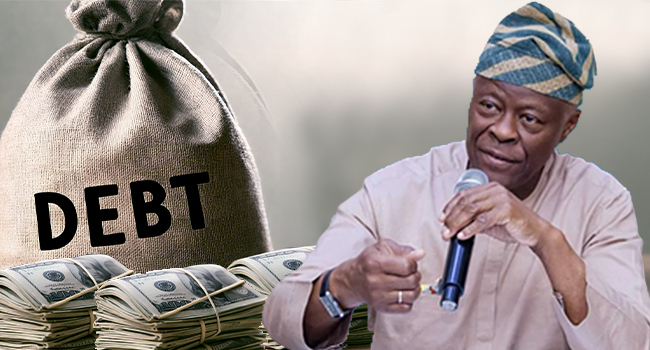
The Federal Government’s priority now is to grow revenue internally rather than depend heavily on debt financing, said the Minister of Finance and Coordinating Minister of the Economy, Wale Edun.
He noted that while Nigeria remains open to international capital markets, borrowing is no longer the centrepiece of its fiscal strategy.
According to Edun, the government is intensifying efforts to expand revenue collection, strengthen fiscal sustainability, and reduce vulnerability to external shocks, especially as emerging markets face tightening global financial conditions.
Reforms, Revenue, Investor Confidence
Edun explained, while speaking on Bloomberg Television, that Nigeria’s current economic strategy builds on a series of reforms introduced since President Bola Tinubu took office in 2023.
These include the removal of fuel subsidies, liberalisation of the foreign exchange market, and a comprehensive overhaul of the tax system aimed at broadening the revenue base.
READ ALSO: FG Opens Applications For PTDF-Funded 2026 Overseas Scholarships
The government plans to raise tax revenue to 18 per cent of GDP by next year, up from about 14 per cent, as part of efforts to fund development priorities without excessive borrowing.
The reforms, Edun said, are designed to modernise the economy, improve transparency, and restore investor confidence.
“The issue now is to focus on revenue, focus on domestic resource mobilisation. We’re hoping to rely less on borrowing,” he added.
Despite weaker global oil prices, Nigeria’s economic outlook is showing early signs of improvement.
The International Monetary Fund recently upgraded Nigeria’s growth forecast to 4.4 per cent for 2026, citing the impact of ongoing reforms on revenue stability and fiscal sustainability.
At Davos, Nigeria hopes to use the global platform to address investor concerns around inflation, exchange-rate stability, policy consistency, and long-term debt management—key issues for portfolio investors and multinational firms assessing Nigeria’s market.
Nigeria House Debuts
In a landmark move, the country officially unveiled its first-ever sovereign pavilion at the WEF, known as Nigeria House Davos, marking a new phase in the country’s engagement with global investors.
Vice President Kashim Shettima formally opened the facility on the sidelines of the Forum, describing it as a strategic hub for showcasing Nigeria’s economic potential and deepening international partnerships.
The pavilion is designed to host high-level investment discussions, policy dialogues, and sector-focused engagements throughout the week.
“But its true essence must come from the private sector. Government can open doors, create frameworks, and de-risk environments. Only enterprise can animate growth, scale opportunity, and translate policy into productivity,” he said.
Priority Sectors
Minister of Industry, Trade and Investment, Jumoke Oduwole, said Nigeria is spotlighting four priority sectors at the Forum: solid minerals, sustainable agriculture, the creative economy, and the digital economy.
These sectors reflect the government’s push to diversify growth away from oil and attract long-term foreign direct investment.
Nigeria House was established through a public-private partnership and sits prominently on the Davos Promenade, signalling a more deliberate and confident Nigerian presence at the world’s most influential economic gathering.
Why WEF Matters For Nigeria
Shettima is leading Nigeria’s delegation to the ongoing global event, held from January 19 to 23, 2026. His participation underscores the importance the Federal Government attaches to global economic diplomacy at a time of domestic reform.
The Vice President arrived in Switzerland following a visit to Conakry, Guinea, where he represented President Bola Tinubu at the inauguration of President Mamadi Doumbouya.
He was received in Davos by senior government officials, including the Minister of Foreign Affairs, Yusuf Tuggar, and Oduwole.
The WEF brings together heads of state, global CEOs, investors, policymakers, and civil society leaders, making it a critical platform for Nigeria to shape narratives, attract capital, and influence global economic conversations.
The Forum offers Nigeria direct access to global decision-makers controlling capital flows, supply chains, and technology investments.
At a time when Nigeria is resetting its economic fundamentals, visibility and credibility at Davos are critical to unlocking investment, stabilising foreign exchange inflows, and supporting growth.
With Nigeria House Davos and a reform-focused message, the country may be signalling a shift from crisis management to long-term economic strategy—anchored on revenue, reform, and resilience.
At the 2025 World Economic Forum, Nigeria’s participation centred on promoting the country’s economic prospects and attracting investment, particularly by participating in discussions on Africa’s frontier markets and digital trade.
Vice President Shettima also took part in bilateral meetings and forums such as the “Roadmap to Co‑create Investment Opportunities for Africa’s Frontier Markets” workshop organised by the African Development Bank and in sessions on leveraging digital trade as a catalyst for growth across Africa.