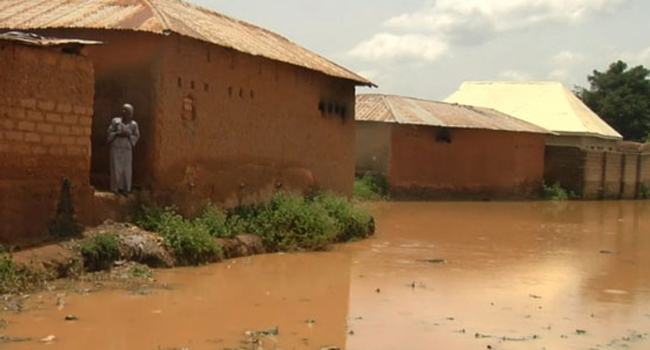
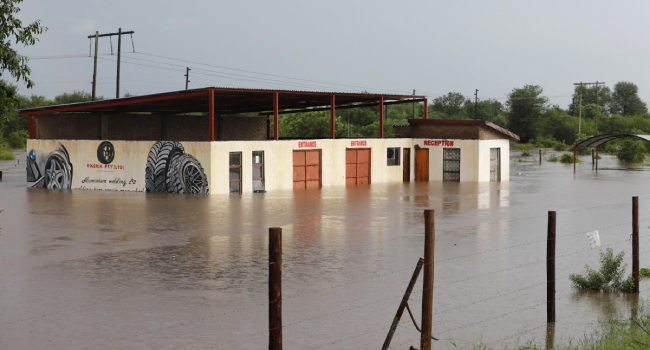
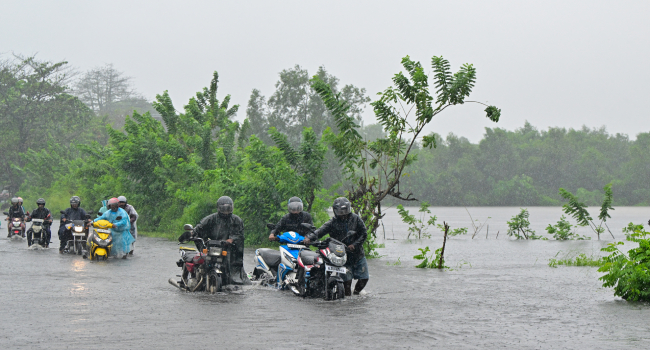
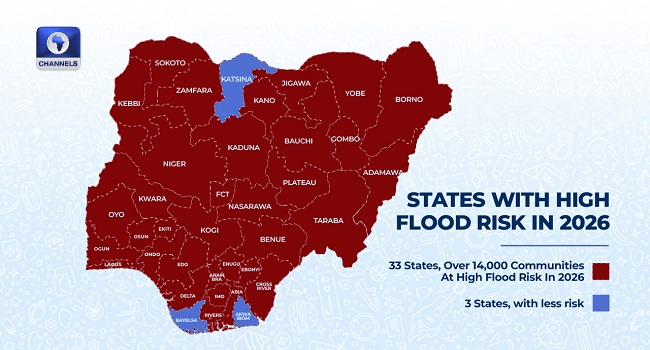
The Federal Government has revealed that 226 local government areas in 33 states of the federation and the Federal Capital Territory fall within the high flood risk areas identified in 2026.
The Minister of Water Resources and Sanitation, Joseph Utsev, stated this on Wednesday during the public presentation of the 2026 Annual Flood Outlook by the Nigeria Hydrological Services Agency at the State Banquet Hall of the Aso Villa, Abuja.
“Fourteen thousand, one hundred and eighteen communities in 266 local government areas in 33 States and the FCT fall within the high flood risk areas.
“The states are: Abia, Adamawa, Anambra, Bauchi, Bayelsa, Benue, Borno, Cross River, Delta, Ebonyi, Edo, Enugu, Gombe, Imo, Jigawa, Kaduna, Kano, Kebbi, Kogi, Kwara, Lagos, Nasarawa, Niger, Ogun, Ondo, Osun, Oyo, Plateau, Rivers, Sokoto, Taraba, Yobe, Zamfara, and the FCT,” Utshev, a professor, said.
According to the outlook, 405 LGAs in 35 states of the federation fall within the moderate flood risk area, except Ekiti State.
READ ALSO: Lagos Predicts Above-Normal Rainfall For 2026, Issues Flood Alert To Residents
Meanwhile, incidents of minimal flood are expected in 923 communities in 77 LGAs in 24 states.
“Low Flood Risk: Incidences of minimal flood are expected in 923 communities in 77 LGAs in 24 States. The states are Adamawa, Anambra, Bauchi, Bayelsa, Benue, Borno, Cross River, Delta, Ebonyi, Edo, Jigawa, Kaduna, Kano, Kebbi, Kogi, Nasarawa, Niger, Ogun, Ondo, Osun, Oyo, Sokoto, Taraba, and Zamfara,” the minister said.
He further disclosed that this year’s annual flood outlook introduced a community-based flood forecasting, which means forecasts are now tailored to specific communities for quick intervention.
Emergency Response Systems
Meanwhile, President Bola Tinubu has reaffirmed his administration’s commitment to strengthening emergency response systems and promoting sustainable development across the country.
Tinubu, who was represented by the Minister of Environment, Balarabe Lawal, said that the government had carefully assessed existing challenges and recognised the critical role of rescue teams in mitigating emergencies.
He noted that efforts were underway to enhance the capacity and strategic direction of relevant ministries to ensure more effective and timely responses.
The President also stressed the need to build a sustainable future through improved coordination, planning, and service delivery.
According to him, effective communication remains a key tool in fostering collaboration, increasing public awareness, and ensuring prompt response to emerging issues.
Tinubu said that with improved communication and strategic planning, the government was confident of overcoming current challenges and delivering better outcomes for citizens.
The event with the theme, ‘Smart Water Resources Management: Moving From Oil To A Water-Based Economy’ had in attendance minister and other stakeholders.