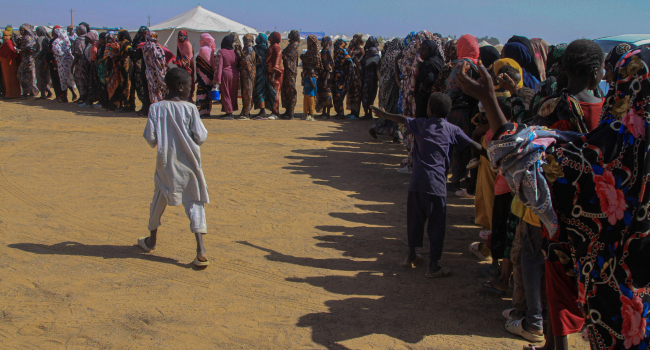
Surviving in Sudan these days means going back to basics: with the banking system in ruins after more than two years of war, barter and IOUs have become the only way for many people to secure the essentials.
“I haven’t held a banknote in more than nine months,” said civil servant Ali in Dilling, South Kordofan state.
The town has been besieged by the paramilitary Rapid Support Forces (RSF), who have been battling the army since April 2023.
In Dilling, as elsewhere, clothing and household appliances are sometimes used as currency to exchange for a couple of kilos of flour or rice, or a few litres of fuel for vehicles or generators.
“I once exchanged a hoe and a chair for three bags of sorghum,” a staple cereal in many parts of Africa, said Ali, 33.
With no cash and much of Sudan under a total communications blackout, many people like Ali are resorting to the barter system.
“Motorcycle and tuk-tuk (motorised tricycle) drivers are given oil and soap as payment for fares,” said Al-Sadiq Issa, a local volunteer contacted by AFP.
“Some families offer corn, flour, or sugar in exchange for things like vehicle maintenance,” he added.
When fighting between the army and the RSF engulfed Khartoum at the start of the war, the Central Bank, connected to the secure SWIFT interbank network, was set ablaze and then occupied by paramilitary fighters for nearly two years.
With banks closed or looted and safes emptied, the economy has collapsed. One euro, which used to be worth 450 Sudanese pounds, now goes for 3,500 on the black market.

Digital Transactions
Before the war erupted, Sudan seemed on the verge of a breakthrough.
The gradual lifting of economic sanctions, imposed on Khartoum since 1997 over its alleged support for Islamist groups, offered the prospect of reintegration into global financial systems.
Only 15 percent of the Sudanese people had bank accounts at the time, according to the World Bank. But digital transactions, particularly via the Bankak app owned by the Bank of Khartoum, were becoming widespread in urban areas.
“Before the conflict began in 2023, Sudan’s financial sector was on the cusp of major transformation towards a more open market approach, similar to models in Kenya, Tanzania, and Ghana,” said William Cook, an expert at the Washington-based Consultative Group to Assist the Poor (CGAP).
“Unfortunately, the conflict has halted much of this progress.”
The war between the army and the RSF has killed tens of thousands of people, displaced 12 million, and plunged Sudan into what the UN says are the world’s largest hunger and displacement crises.
In much of the country, particularly areas under RSF control, law and order have completely broken down, and reports of looting and extortion have been rampant.
“Having cash puts you in danger,” said grocer Dafallah Ibrahim in Omdurman, the capital’s twin city, which the army retook in the spring.
For people in army-held cities or who can get a secure connection, the Bankak app is often a lifeline, allowing people to receive salaries, aid from relatives abroad, or funds distributed by humanitarian programmes.
But those trapped under blackouts and paramilitary sieges, like in South Kordofan capital Kadugli, have to find workarounds.
READ ALSO: Australia Ban Offers Test On Social Media Harm
Fraud Risks
Merchant Abdelrahman told AFP he had an honour system of extending credit to his customers: “I tell them, ‘You can pay when Bankak works again’, and I put down their debts in a notebook.”
Wherever the local telecoms infrastructure broke down, antennas for billionaire Elon Musk’s Starlink satellite system — smuggled across borders — proliferated, with owners renting out access by the hour.
Many were owned and operated by RSF fighters, and the military banned their use and sale in December 2024.
When the RSF controlled Khartoum, it “took up to 25 percent commission” to provide cash in exchange for a bank transfer via Bankak, civil servant Youssef Ahmed told AFP.
Digital transactions also require a bank account, a passport, and a phone, which many people do not have, especially in rural areas.
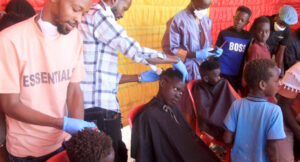
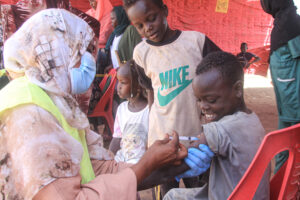
Overwhelmed health workers rushed from patient to patient in makeshift tents in Sudan, trying to help even though they too had barely escaped the fall of El-Fasher to paramilitary forces.
With no other option, many are forced to trust neighbours or acquaintances to receive their transfers, relying on robust community networks, but with no recourse if their money goes missing.
To try to prevent this, the Bank of Khartoum in December last year allowed the opening of accounts remotely and the use of expired identity documents.
But at the same time, the introduction by the pro-army authorities of new banknotes in areas they controlled has fragmented the monetary system.
Sudan is effectively divided between army-controlled areas in the north, east, and centre, and those controlled by the paramilitaries in the west and south.
AFP