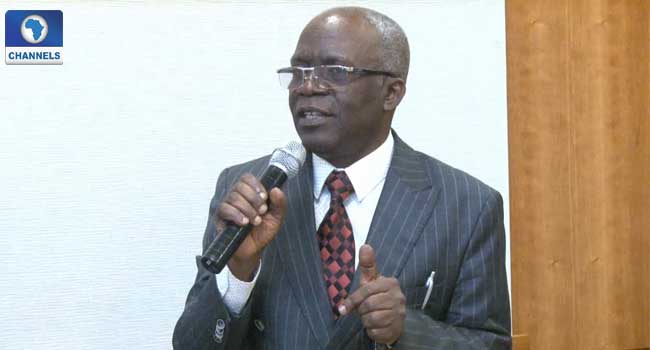
 Senior Advocate of Nigeria Femi Falana has asked the Presidency to ignore the resolution of the Senate calling for the removal of Mr Ibrahim Magu as the Acting Chairman of the Economic and Financial Crimes Commission.
This, he said, is because the resolution of the Senate concerning the acting EFCC chairman is illegal.
In a statement on Thursday, Mr Falana explained that based on the provisions of the Constitution, and contrary to the views of the Senate, the lawmakers cannot direct the Acting President to remove Mr Magu.
Doing that would represent an attempt by the Senate to combine and wield executive and legislative powers, he said.
He recalled that President Muhammadu Buhari had appointed Mr Magu as acting EFCC Chairman in November 2015 “sequel to section 171 (1) of the Constitution.

He also noted that after Mr Magu had acted in that capacity for over a year, the Senate refused to confirm him as the substantive Chairman of the EFCC, but the President retained him because he was satisfied with his performance.
He added, “A couple of days ago, the Senate revisited the matter. In a rather bizarre move, the Senate decided to combine legislative powers with executive functions by passing a resolution which purportedly directed the Acting President, Professor Yemi Osinbajo SAN to remove Mr Magu from the post of the Acting Chairman of the EFCC forthwith.”
The Senior Advocate explained that the resolution of the Senate was alleged to have been anchored on Section 2(3) of the EFCC Act which provides that “The Chairman and members of the Commission other than ex-officio members shall be appointed by the President and the appointment shall be subject to confirmation by the Senate.”
He also suggested that the Senate should have sought better interpretation and realised that its resolution contradicted section 171 (1) of the Constitution, which stipulates that, “Power to appoint persons to hold or act in the offices to which this section applies to remove persons so appointed from any such office shall vest in the President.”
“It is further submitted that Section 2 (3) of the EFCC Act relied upon Senate to justify the confirmation of the Chairman of the EFCC is inconsistent with section 171 (2) of the Constitution,” he added.
“Indeed, of all the positions listed in subsection 2 of the Constitution, it is only in the appointments of ambassadors and high commissioners made by the President which require the confirmation of the Senate.”
Mr Falana who cited cases in which the power of the President to make certain appointments without the confirmation of the Senate had been challenged, “In view of the foregoing, the implementation of the resolution of the Senate on the removal of Mr Ibrahim Magu as the Acting Chairman of the EFCC should be ignored by the Presidency on account of its apparent illegality.”