 The Nigerian government has been tasked on the implementation of Economic policies seen as key to the actualisation of Nigeria’s vision of becoming one of the top 20 economies of the world by 2020.
The call is coming days after Nigeria, Mexico, Indonesia and Turkey were tipped among countries seen as next economic power houses in the world.
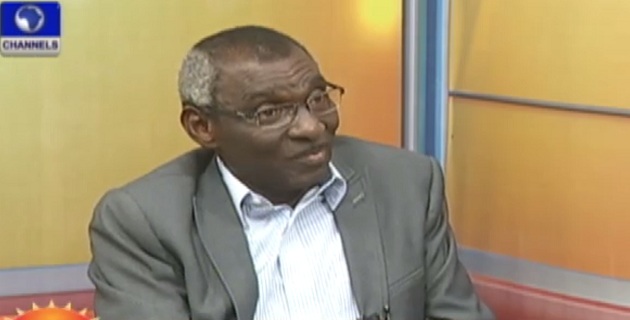
An economist, Professor Olaseni Akintola-Bello, said that Nigeria’s economic policies were good enough for the actualisation of the vision 20:2020.
“If Nigeria continues doing what it is doing at the moment, we will rank among the major emerging national economies: Brazil, Russia, India, China and South Africa (BRICS)
“Policies required to become a member of BRICS is what we are focusing on as we pursue vision 20:2020. Nigeria should not abandon the vision,” Professor Akintola-Bello said on Monday on Channels Television’s programme, Sunrise Daily.
Reducing Poverty
He pointed out that the BRICS had been able to reduced the level of poverty in the respective nations through its policies and stressed that Nigeria should focus on reducing the level of poverty in line with the vision.
“When you want to reduce poverty you look at what other countries that have succeeded in reducing poverty have done,” he stated.
As witnessed in the BRICS nations, to rank among top economies in the world, two aspects of poverty – income poverty and human poverty- must be reduced drastically
Reducing human poverty, according to Professor Akintola-Bello, involves, making sure that citizens have access to basic essential things – water, education, healthcare among others.
On the other hand, reducing income poverty, involves guarantying people of the minimum standard of living.
“This is only achievable through the creation of jobs.
“India for instance has a law which is a national law that makes it possible for every citizen to be guaranteed 100 days of employment in a year.
“It is the same thing that Nigeria SURE-P is trying to do,” he said.
Brazil has a policy that provides social safety nets through its conditional Cash Transfer Scheme. The scheme encourages people to send their children to school.
Many children are in the street in Nigeria hawking, a situation that is attributed to poor standard of living.
“The parents send them to the street to hawk in order to make addition income. But what the Cash Transfer Scheme will do, if introduced in Nigeria, is to encourage parents not to send their children to the street to hawk. They will be given money on the condition that these children will be sent to school,” Professor Akintola-Bello said.
He reiterated that there were policies that the Nigerian government had put in place that were on the right path and called on the government to give the policies the kind of promotion that they needed.
“MDGs, for example, have been promoting conditional cash transfer in many states, but there is the need to promote them on a massive scale so that they can have impact.”
Growth Potential
Another sector that could drive the Nigerian economy further towards the vision is the manufacturing sector, which Professor Akintola-Bello said that the country was not doing so well in.
He stressed that the government should act as a catalyst in the sector.
“The government should promote the actual manufacturing sector and the informal sector.
“The informal sector holds the key to development and they are so heterogeneous – the carpenters, electronics repairers, shoe makers amongst others. When you develop the informal sector, you develop the economy because there is growth potential there. Adequate attention has not been given to the informal sector. We need to promote the sector because statistically, they are supposed to constitute about 70 per cent of the growth rate.
Leveraging On The Population
The population of Nigeria has been seen as one of the drivers of the economy and Professor Akintola-Bello further said that the size of the nation was important in terms of production, demand and consumption.
“If you stimulate demand you will stimulate the economy because the demand of goods and services will increase. If you give stipends for instance, they will stimulate the economy because the money will be spent on buying of goods,” he said.
Power Sector Reforms
Poor power supply has also affected the manufacturing sector in Nigeria, a development that has led to high cost of goods.
The Nigerian government has started series of reform in the sector by carrying out the first phase of the privatisation process in the sector.
Professor Akintola-Bello also said that the power sector reform, if sustained, would go a long way in improving Nigeria’s economy.
“Once you increase the power sector, a lot of people will be able to make some little money. The disposable income will increase. The cost of production will come down, the cost of goods will come down and the disposable income of consumers will increase. If the disposable income of consumers increases, there will be increased savings. When there is increased savings, the GDP ratio will increase,” he said, giving a breakdown of the multiplier effect improvement in the power sector would have on the economy.
Fighting corruption
Another challenge to the Nigerian government’s vision 20:2020, according to Professor Akintola-Bello, is corruption, which he said was anti-growth and anti-development.
“We have to make sure that public expenditure is well directed and that we check all forms of leakages. Reduction of corruption is extremely important because if we reduce it, we will be able to promote development,” he said.
He also pointed out that the Nigerian government had put in place some good monetary policies that would reduce a lot of leakages in the system, saying that the implementation of the policies is very important.
“They should be implemented to the letter,” he said.