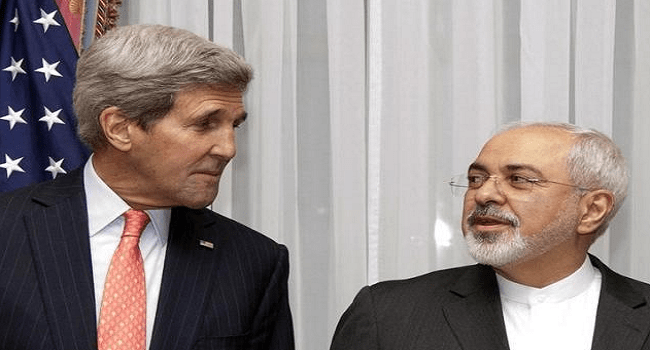
 U.S. Secretary of State John Kerry met his Iranian counterpart Mohammad Javad Zarif on Saturday in a bid to overcome the remaining obstacles to a final nuclear agreement, a month ahead of a deadline for a deal between Tehran and world powers.
The meeting in Geneva is the first substantive talks since Iran and the six world powers – Britain, France, the United States, Russia, China and Germany – struck an interim deal on April 2.
Among the issues still to be resolved is the push by the world powers for international access to Iran’s military sites and its team of atomic experts. For its part, Tehran wants sanctions to be rescinded immediately after a deal is reached.
A senior U.S. State Department official said there had been substantial progress in talks in Vienna in recent weeks on drafting a political agreement and three technical annexes on curbing Tehran’s nuclear program.
The United States has said it will not extend the talks beyond the June 30 deadline. “We really do believe we can get it done by (June) 30th and we’re not contemplating an extension. We just aren’t,” the official told reporters traveling with Kerry to Geneva.
But France, which has demanded more stringent restrictions on the Iranians, has indicated talks are likely to slip into July. Iran’s senior nuclear negotiator Abbas Araqchi also warned that the deadline might need to be extended.
“We are on a good track right now to make progress and we absolutely believe it is possible we can get this done by June 30,” the senior State Department official said, adding that Kerry’s schedule for June had been cleared to focus on the Iran talks.
“A lot of the decisions (left) are at the political level. You will see more involvement at (Kerry’s) level for that reason,” the official said, adding that the talks would likely occur in Vienna.
Zarif, when asked at the start of the talks on Saturday whether the deadline would be met, replied: “We will try.”