The once flourishing smuggling of Premium Motor Spirit or petrol from Nigeria to Niger Republic has slowed, as the neighbouring country grapples with one of its worst energy crises in history.
The development comes on the heels of Niger’s exit from the Economic Community of West African States (ECOWAS) to join the Alliance of Sahel States (ASS).
The Commercial Director of the state-owned Nigerien Company for Oil Products (Sonidep), Maazou Aboubacar, told AFP that the country’s state-owned Soraz refinery in Zinder “can no longer satisfy domestic demand.”
According to him, the reason is principally down to the drying up of the flourishing black market supply by Nigeria.
The country’s refinery provides Sonidep with only 25 tanker trucks of petrol a day, when the daily national requirement is up to twice that.
“The fuel that came into Niger illegally from Nigeria represented up to half of the market. It supplied the large regions near the border between the two countries,” Aboubacar was quoted as having said.
Domestic consumption was said to have been boosted by a cut in fuel prices introduced by the military regime that seized power in Niger in 2023.
The country’s military rulers have expelled three Chinese oil executives from the country, according to AFP.
Request for the departure of the Niger-based directors of the China National Petroleum Corporation (CNPC), the West African Oil Pipeline Company (WAPCo) and the joint venture oil refinery SORAZ was communicated Wednesday, a report by Reuters said, quoting sources.
The military regime took power in Niger in a coup in 2023 and has vowed to secure revenues from its mining and oil resources.
READ ALSO: FG Desirous To Increase Investment In Oil And Gas Sector — Lokpobiri
It was further gathered that the fuel crisis in Niger may have also been self-inflicted after a confrontation between the junta and the Chinese oil companies which had long dominated the country’s petroleum sector.
A security analyst, Zagazola Makama, revealed in an article he published on X that trouble began in March 2024 when the China National Petroleum Corporation granted the Nigerien government a $400m advance, using future crude oil deliveries as collateral.
The deal was to help Niger cope with crippling economic sanctions imposed by the Economic Community of West African States following the July 2023 coup in the country. However, the junta was cash-strapped when it was time to repay the debt.
Instead of negotiating, the military rulers were said to have decided to strong-arm China, demanding an $80bn tax from Soraz (Zinder Refinery Company) despite the state-owned oil company, Sonidep already owing Soraz a staggering $250bn.
According to Makama, when China refused to provide additional loans, the junta retaliated by expelling Chinese oil executives from the country and seizing Soraz’s bank accounts. The decision was said to have backfired and led to the collapse of Niger’s petroleum sector, which is heavily reliant on Chinese expertise and investment.
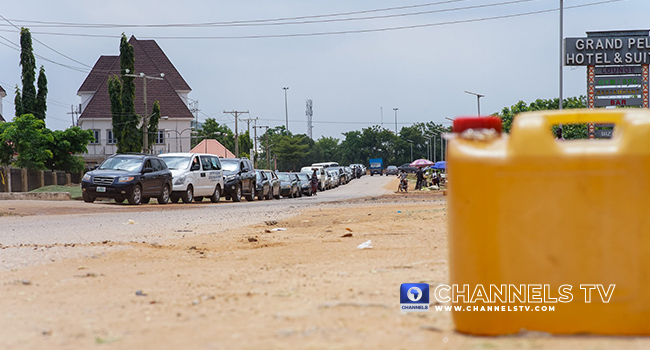
Channels Television gathered that serious fuel scarcity has since hit Niger, with people living around the border communities in Sokoto, Katsina, Jigawa, Yobe and Borno, reporting serious long queues in the few filling stations that have petrol to sell.
According to unconfirmed reports, government sources in Nigeria said Niger had sought Nigeria’s assistance, leading to an alleged reported approval of 300 trucks of PMS for delivery.
The downturn of events for Niger comes less than two years after President Bola Tinubu removed the fuel subsidy in Nigeria.
Oil dealers have also raised concern about the closure of filling stations at border towns, stressing that marketers were losing so much revenue due to the development.
Since the start of March, Niger Republic has been grappling with an unprecedented fuel shortage.
Economic activities were brought to a halt as filling stations in Niamey, the capital, and those in other towns ran out of petrol recently.
For several years, the country depended majorly on Nigeria for about 50 per cent of its local fuel consumption. Petrol was usually smuggled into the neighbouring country through illegal routes.
However, since President Tinubu’s administration removed the fuel subsidy in 2023, the price of petrol skyrocketed, making the smuggling of the product unattractive to illegal traders in border areas.
Aside from Niger, countries like Benin Republic and Togo were also beneficiaries of Nigeria’s petrol subsidy which stopped immediately after Tinubu took over on May 29, 2023.