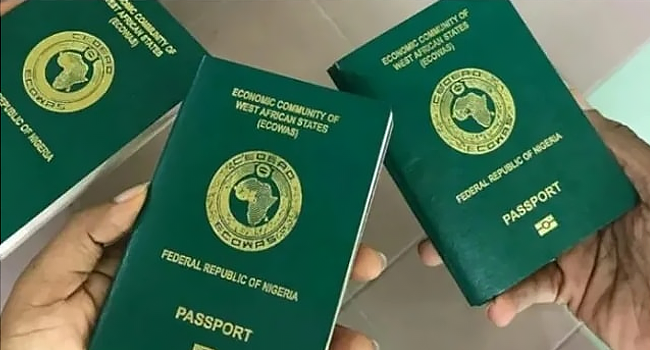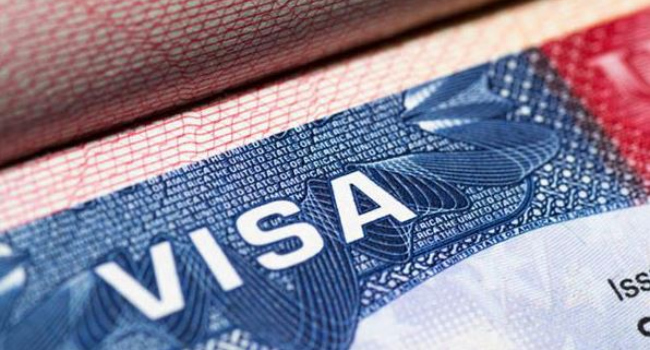
Nigerians applying for United States B1/B2 visitor visas may soon face significantly higher financial requirements, with visa applicants potentially paying up to $15,000 as a refundable visa bond beginning January 21.
This follows a new policy announced by the United States Department of State.
The measure places Nigeria among 38 countries whose nationals will be subject to the new bond requirement.
READ ALSO: Visa Fraud Has Serious Consequences, US Warns Nigerians
In Nigeria’s case, the US cited the presence and operations of radical Islamic terrorist groups such as Boko Haram and the Islamic State in certain parts of the country, resulting in “substantial screening and vetting difficulties.”
The implementation dates vary by country, with Nigeria’s date set for January 21, 2026.
An overstay rate of 5.56 per cent for B1/B2 visas and 11.90 per cent for F, M, and J visas was also cited as a justification for Nigeria’s inclusion. As a result, the travel suspension covered immigrant visas as well as non-immigrant categories, including B-1, B-2, B-1/B-2, F, M, and J visas.
The directive states that, “Any citizen or national travelling on a passport issued by one of these countries, who is otherwise found eligible for a B1/B2 visa, must post a bond of $5,000, $10,000, or $15,000. The amount is determined during the visa interview.
“Applicants must also submit the Department of Homeland Security’s Form I-352. Applicants must also agree to the terms of the bond through the US Department of the Treasury’s online payment platform, Pay.gov. This requirement applies regardless of the place of application.”
According to the announcement, the visa bond is designed as a compliance mechanism rather than a visa fee.
Applicants approved for the B1/B2 category—commonly used for short-term business and tourism travel—may be required to deposit a substantial sum, ranging from several thousand dollars up to $15,000, depending on individual risk assessments.
The bond is intended to ensure that visa holders comply strictly with the terms of their visas, including respecting the authorised duration of stay and departing the United States as required.
The policy reflects growing concern by US authorities over visa overstays and non-compliance, particularly from countries with historically higher overstay rates.
By introducing a financial guarantee, the State Department aims to incentivise lawful behaviour and reduce the administrative and enforcement burdens associated with overstays.
Failure to comply fully with the visa conditions could result in total forfeiture of the bond, according to information published on the US Department of State’s website, Travel.State.Gov.
Concerns
The announcement has sparked widespread discussion and concern among Nigerians, especially travellers.
The upfront cost could effectively limit access to legitimate travel for businesspeople, professionals, students’ parents, tourists, and families seeking short-term visits.
In a country where foreign exchange constraints already pose challenges, the requirement to lock up such a large sum—even temporarily—may place US travel beyond the reach of many otherwise eligible applicants.
The policy also has broader implications for people-to-people exchanges, business ties, and tourism between Nigeria and the United States.
Nigerian entrepreneurs attending trade fairs, conferences, or investment meetings may need to reconsider travel plans, while families hoping to visit relatives could face additional financial strain.
Analysts warn that the bond requirement, though targeted at compliance, may inadvertently discourage lawful travel and deepen perceptions of unequal access to global mobility.
Nigeria’s inclusion among the 38 affected countries highlights ongoing disparities in global visa regimes, where applicants from developing nations often face more stringent requirements than those from wealthier countries.
African countries accounted for 24 of the 38.
As January 21 approaches, the Department of State advises prospective Nigerian applicants to seek clarity from official US embassy channels on how the bond will be implemented, including eligibility criteria, payment processes, refund timelines, and possible exemptions.
But while the State Department has framed the policy as a targeted and temporary safeguard, its real-world impact on Nigerian travellers—and on US–Nigeria relations—will become clearer in the months ahead.
See Highlights And Other Countries Affected Below:
How Much Will Nigerians Need to Pay?
Under the new policy, Nigerians may be required to post a refundable visa bond of one of the following amounts:
* $5,000
* $10,000
* $15,000
The exact amount is not fixed in advance but is decided by the U.S. consular officer during the visa interview.
In addition to the bond, the applicant must also submit a Department of Homeland Security Form I-352 and agree to the terms of the bond through the Department of the Treasury’s online payment platform Pay.gov.
Ports Of Entry
When a traveller is issued a visa after posting a bond, there are three designated entry and exit ports for that person: the Boston Logan International Airport (BOS), John F. Kennedy International Airport (JFK), and Washington Dulles International Airport (IAD).
“Not doing this might lead to a denied entry or a departure that is not properly recorded,” the State Department said.
The Process: Step By Step
Here’s how the visa bond requirement works from start to finish:
1. Apply for a U.S. B1/B2 Visa as usual
This begins with filling out your DS-160 and scheduling a consular interview at the U.S. Embassy in Abuja or the Consulate in Lagos.
2. Interview with Consular Officer
During the interview, if the officer finds you are otherwise eligible for the visa and identifies you as someone subject to the bond rule, they will inform you that a bond is required and determine the amount ($5,000–$15,000).
3. Submit Form I-352
You must complete Department of Homeland Security Form I-352, the visa bond form, as part of the bond process.
4. Pay the Bond via Pay.gov
The payment must be made online through the U.S. Department of the Treasury’s official payment platform (Pay.gov). You will be given a direct link to pay only after the consular officer instructs you. Paying through third-party sites is not allowed and won’t be refunded.
Bond Is Held Until Conditions Are Met
The bond stays with the US government until one of these happens:
* You leave the U.S. on or before your authorised stay
* You never travel on the visa before it expires
* You are denied entry at the U.S. port of entry
If one of those conditions is met, your bond is refunded.
Travel Conditions
After paying the bond, one key requirement tied to this bond is entry and exit through designated U.S. airports — specifically:
* Boston Logan International Airport (BOS)
* John F. Kennedy International Airport (JFK)
* Washington Dulles International Airport (IAD)
Failing to use these ports of entry may result in denied entry or failure to properly record your departure.
List Of Affected Countries
* Algeria (January 21, 2026)
* Angola (January 21, 2026)
* Antigua and Barbuda (January 21, 2026)
* Bangladesh (January 21, 2026)
* Benin (January 21, 2026)
* Bhutan (January 1, 2026)
* Botswana (January 1, 2026)
* Burundi (January 21, 2026)
* Cabo Verde (January 21, 2026)
* Central African Republic (January 1, 2026)
* Cote D’Ivorie (January 21, 2026)
* Cuba (January 21, 2026)
* Djibouti (January 21, 2026)
* Dominica (January 21, 2026)
* Fiji (January 21, 2026)
* Gabon (January 21, 2026)
* The Gambia (October 11, 2025)
* Guinea (January 1, 2026)
* Guinea Bissau (January 1, 2026)
* Kyrgyzstan (January 21, 2026)
* Malawi (August 20, 2025)
* Mauritania (October 23, 2025)
* Namibia (January 1, 2026)
* Nepal (January 21, 2026)
* Nigeria (January 21, 2026)
* Sao Tome and Principe (October 23, 2025)
* Senegal (January 21, 2026)
* Tajikistan (January 21, 2026)
* Tanzania (October 23, 2025)
* Togo (January 21, 2026)
* Tonga (January 21, 2026)
* Turkmenistan (January 1, 2026)
* Tuvalu (January 21, 2026)
* Uganda (January 21, 2026)
* Vanuatu (January 21, 2026)
* Venezuela (January 21, 2026)
* Zambia (August 20, 2025)
* Zimbabwe (January 21, 2026)