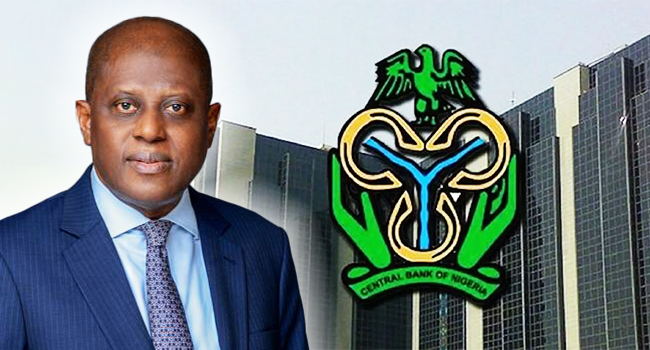
Nigeria’s gross external reserves climbed to $50.45 billion as of 16 February 2026, marking the highest level in 13 years, according to the Governor of the Central Bank of Nigeria, Olayemi Cardoso.
Cardoso disclosed this on Tuesday while addressing journalists at the end of the 304th Monetary Policy Committee (MPC) meeting held in Abuja.
He said the increase reflects stronger macroeconomic conditions and improved confidence in the country’s policy direction.
“Gross external reserves rose significantly to 50.45 billion dollars as of February 16, 2026, the highest in 13 years. This provides an import cover of 9.68 months for goods and services,” Cardoso stated.
Drivers
Providing further insight, the governor attributed the rise to favourable trade dynamics, a surplus current account position, and growth in non-oil exports.
Cardoso noted that market confidence played a central role.
“The gross reserves are the largest that we have had in the last 13 years. We have seen very positive signals with respect to the way the macro is developing, favourable trade developments, the current account is in healthy surplus, and non-oil exports have also gone up.
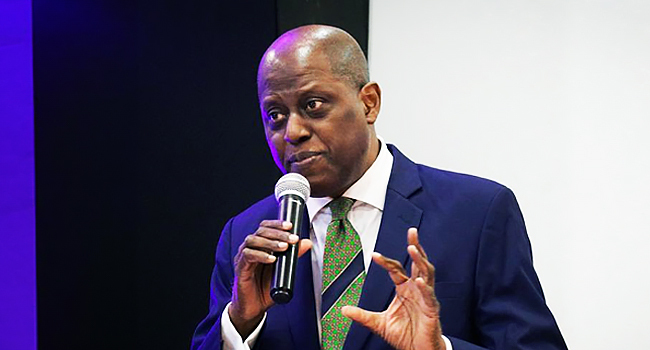
“Underpinning all these, quite frankly, is market confidence. Without market confidence, no matter what you do, you will find significantly sub-optimised outcomes.
“Over time, we have embarked on a number of international fora where we told our story, made promises, and ensured we stuck to those promises. We have been as open and transparent as possible to engender positive market sentiment, and I believe that has paid off,” he stated.
Sustainability, Risks
On the sustainability of the reserves, Cardoso cautioned that external and domestic risks remain, including global shocks, oil price volatility, and fiscal pressures.
“On how sustainable, there will always be risks to any outlook. We cannot underestimate potential global shocks that could come our way. Nobody has a crystal ball; we can only project into the future. Oil prices and how they play out are factors we can only forecast.
“Importantly, pre-election spending, if not properly contained, could destabilise the stability we have accomplished, as well as fiscal deficits. We are in a new year, and that is being looked at carefully. On our side, we must ensure consistency in policy formulation and avoid policy somersaults,” he said.
The apex bank had earlier projected that reserves could rise to about $51.04 billion by the end of 2026.
This is the strongest balance since May 2013, when reserves stood at approximately $48.51 billion.
The reserves ended 2025 at roughly $45.5 billion (up from $40.8 billion at the start of that year) and have maintained a steady upward trajectory throughout early 2026.
Meanwhile, the Central Bank of Nigeria (CBN) has projected that reserves could reach $51 billion by the end of 2026.
Interest Rate
The Monetary Policy Committee (MPC) at its 304th meeting voted on policy parameters as follows:
• Monetary Policy Rate (MPR): Reduced by 50 basis points from 27% to 26.5%.
• Cash Reserve Ratio (CRR): Retained at 45% for Commercial Banks and retained at 16% for Merchant Banks.… pic.twitter.com/IqkdTS1G4o— Central Bank of Nigeria (@cenbank) February 24, 2026
At the event, Cardoso announced that the MPC reduced the Monetary Policy Rate (MPR) by 50 basis points to 26.50 per cent from 27 per cent, with all committee members voting unanimously.
“The committee decided to reduce the monetary policy rate by 50 basis points to 26.50 per cent,” he said.
The MPC also “retained the liquidity ratio at 30 per cent, adjusted the standing facilities corridor to +50/-450 basis points around the MPR, maintained the Cash Reserve Ratio at 45 per cent for commercial banks and 16 per cent for merchant banks, kept the 75 per cent CRR on non-TSA public sector deposits.”
Cardoso explained that the policy decision followed a balanced assessment of risks, with inflation continuing on a downward path.
“The decision was premised on a balanced evaluation of risks to the outlook, which suggests that the ongoing disinflation trajectory would continue, supported by the lagged transmission of previous tightening, sustained exchange rate stability, and improved food supply.
The committee noted the sustained deceleration in year-on-year headline inflation in January 2026, marking the 11th consecutive month of decline,” he added.
He further noted that improvements in Nigeria’s external sector were supported by stronger export earnings and higher remittance inflows, reinforcing stability in the balance of payments.
More Banks Meet Recapitalisation Threshold
The MPC also noted the resilience of the banking system, with Cardoso saying 20 banks have reached the new minimum capital requirement ahead of the March 31, 2026, deadline.
According to him, the banks raised a combined total of N4.05 trillion.
“With regards to key financial soundness, the committee noted that of the 33 banks that have raised additional capital, 20 have met the new minimum capital requirement, reaffirming steady progress towards a more robust and well-capitalized financial system,” the CBN chief said.
“The MPC reiterated the strategic importance of the recapitalization exercise and urged the bank to ensure its successful completion.”
The CBN had in March 2024 asked commercial banks with international licenses to increase their capital base to N500 billion.
It pegged those with national authorisation at N200 billion. The CBN’s move is one of the reform efforts by the apex bank aimed at repositioning the country’s banking sector to compete efffectively especially on the international scene.
The CBN’s move is one of the reform efforts by the apex bank aimed at repositioning the country’s banking sector to compete efffectively especially on the international scene.
During its last meeting in November, the Central Bank of Nigeria said that 16 banks have met the requirement for recapitalisation, an increase from 14 banks as of its September MPC meeting.