The national satellite operator, Nigerian Communications Satellite Limited (NigComSat), has revealed that it recorded a sharp rise in revenue, underscoring renewed momentum in the country’s push to compete in the global space economy.
The Chief Executive Officer of NigComSat, Jane Egerton-Idehen, disclosed that the agency’s earnings grew from N650 million in 2023 to over N2 billion by the end of 2025—more than tripling within two years.
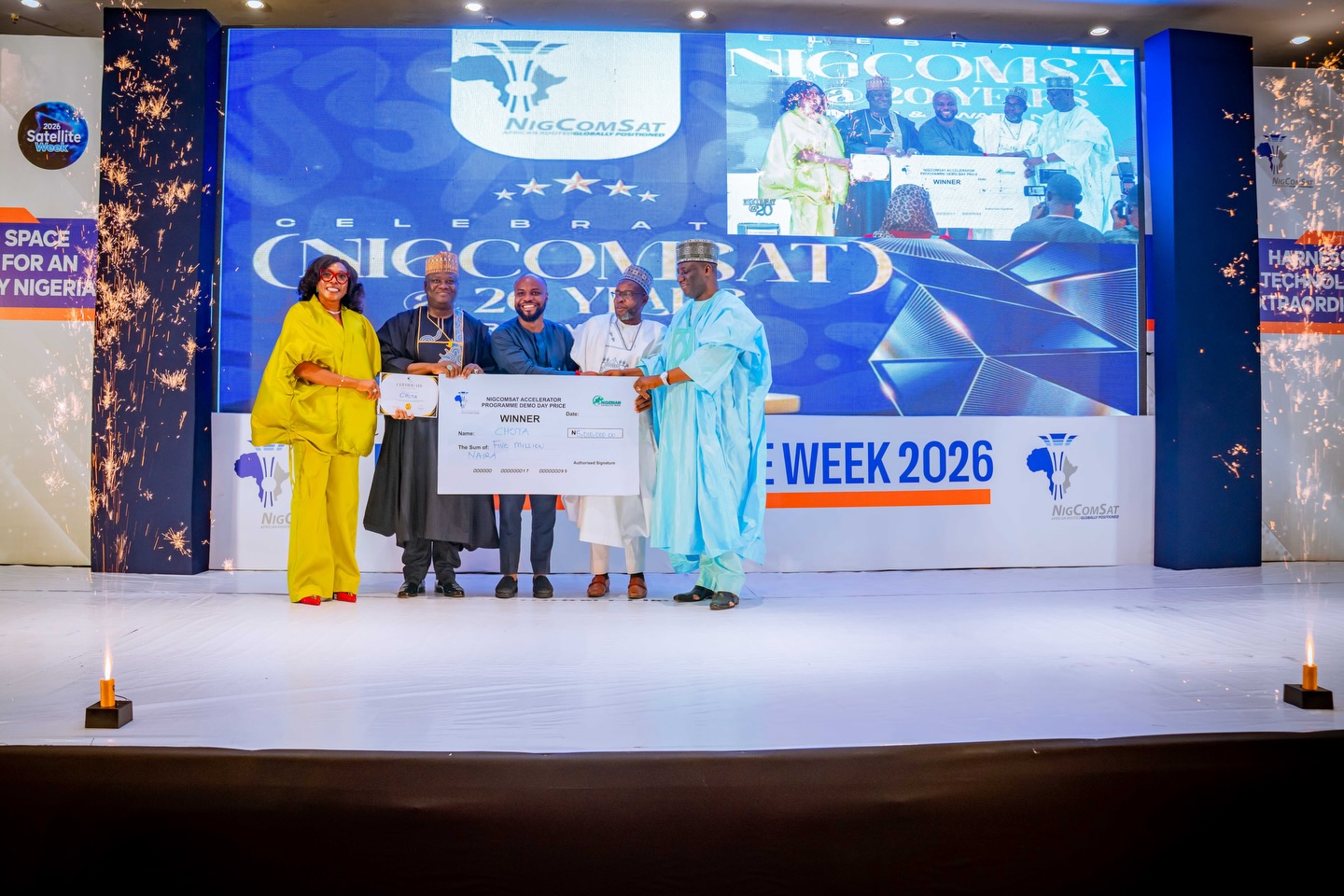
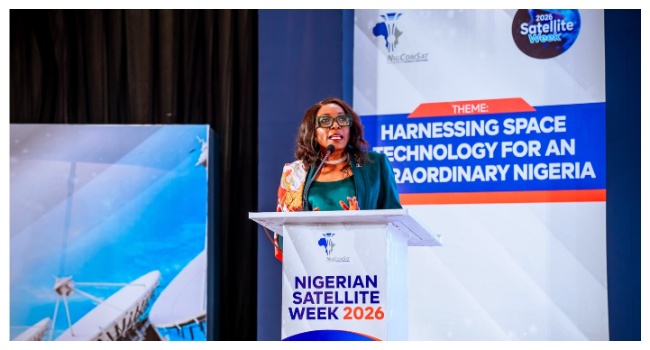
She made this known at the opening of the 2026 Nigerian Satellite Week in Abuja, an event that also commemorates the organisation’s 20th anniversary and convenes key players from government, academia and industry to chart Nigeria’s trajectory in space technology.

Describing the growth as a validation of sustained public investment, Egerton-Idehen said NigComSat has evolved beyond its origins as a single-satellite operator into a multi-service provider.
The agency now delivers broadband connectivity, broadcasting infrastructure and enterprise solutions to clients across Nigeria and other parts of Africa.
“This is a strong return on Nigeria’s long-term investment in space technology,” she noted, highlighting expanding demand for satellite-enabled services in telecommunications, security and digital infrastructure.
Looking ahead, the CEO confirmed that groundwork has commenced for the launch of two new satellites: NigComSat-2A and NigComSat-2B, scheduled for 2028 and 2029, respectively.
The procurement process has been concluded, with financing and implementation phases now underway.

According to her, the next-generation satellites will significantly enhance Nigeria’s capacity in border surveillance, real-time data acquisition and national security operations, while also strengthening regional connectivity.
The planned replacement comes as the country’s current satellite, NigComSat-1R, which was launched in 2011, approaches the end of its operational lifespan in 2026.
Industry observers say the revenue growth and expansion plans position Nigeria to consolidate its leadership in West Africa’s space ecosystem, even as continental heavyweights like Egypt and South Africa continue to dominate the broader African satellite market.