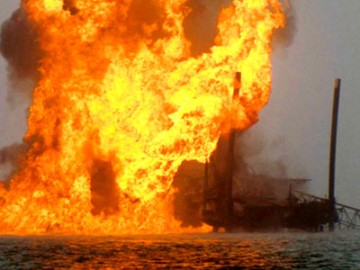

Weeks after the raging flame was put out, the Action Congress of Nigeria (ACN) has criticized the federal government’s handling of the gas pipeline explosion off the Bayelsa coast in January, saying the effect has worsened the plight of the already neglected people in the Koluama community and its environs.
The party in a statement by its National Publicity Secretary, Alhaji Lai Mohammed, on Sunday, said the kid gloves with which the government has treated the company responsible for the disaster – Chevron – contrasts sharply with the way oil firms responsible for pollution are treated elsewhere around the world.
It said the government’s poor handling of the issue, which has worsened the people’s misery and hardship, poisoned their river and ruined their main source of livelihood (fishing), shows total lack of protection for them, while the oil firm responsible is engaging in tokenism in the name of response, instead of being made to pay a massive fine in addition to a thorough clean-up of the affected area. The fire which claimed two lives after the explosion accident occured, raged on for over 6 weeks as the company struggled to put it out.
”For a community that is already neglected, with no potable water, electricity, schools or health facilities, the Chevron gas pipeline disaster – which triggered a perpetual fire that enveloped communities with toxic smoke – is a double whammy, and the response of the government has deepened the pains of the residents and raised the fears that they could face a repeat of the 1953 disaster that wiped off the ancient Koluama community.
The party decried the President’s single visit to the community and condemned his failure to read the riot act to the company. It also condemned the use of Chevron’s helicopter rides in the firm’s boat by other government officials including the Minister of Petroleum who also visited the area. ACN noted that such lop-sidedness by the authorities has “virtually shut their mouths from any meaningful protest.”
Lackadaisical attitude
The party contrasted the lackadaisical attitude of the Nigerian authorities to the way other governments have handled similar pollution by oil companies. It cited how the British Petroleum oil spill in the US was handled in 2010, when the firm was compelled to contribute huge for clean-up operations, in addition to huge fines while the issuance of more licenses for oil exploration in the sea was stopped and a senior BP official had to go.
It also cited the instance of Brazilian prosecutors that are currently filing criminal charges against 17 executives from Chevron and drilling contractor Transocean, after a new leak of crude. The executives have also been barred from leaving the country until the investigation concludes.
The party also noted that in an Ecuadorean court has fined Chevron “that is being treated with kid gloves in Nigeria $8 billion for polluting the Amazon Region” while the Brazilian government slammed the same Chevron with a $28 million fine for causing an oil spill off the country’s coast, and prosecutors demanded US$10.6 billion for environmental damage.” “Yet, in Nigeria, Chevron and other oil firms have decimated farmlands, polluted rivers and waterways and exposed many to toxic wastes and fumes through their carelessness, without facing any fine or being made to pay compensation to the affected people” the party noted. “This is not right and should stop immediately,” ACN said.
The party urged the various individuals and groups that have been campaigning to ensure a better deal for communities in the oil region to call the attention of the federal government, especially the President, to the need for erring oil companies to pay compensation for their acts of omission, clean up the mess they have made in the region and pay huge fines that could serve as a deterrent and encourage best practices in their oil exploration and related activities.