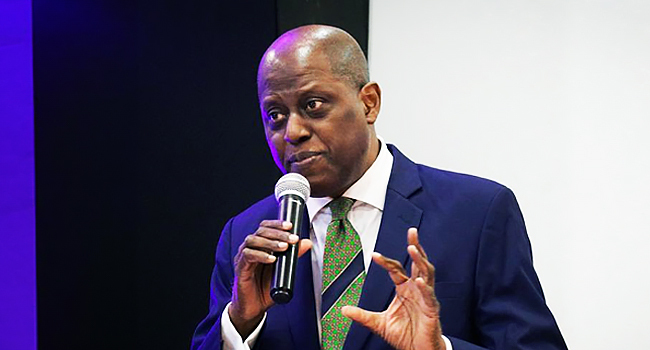
Eminent jurist and retired Justice of the Supreme Court, Justice Kayode Eso, has died at the age of 87.
Justice Eso, who was highly respected for his forthright and courageous views on national issues, died on Friday in London while on holiday, according to his younger brother, Ladipo Eso.
Born in Ilesha, Osun State, Justice Eso had a bachelors and masters degree in law from the Trinity College in London.
Reacting to the news of the death of the eminent jurist, President Goodluck Jonathan said Justice Eso helped to establish judicial independence in Nigeria.
The Special Adviser to the president on Media and Publicity, Reuben Abati on twitter quoted President Jonathan as saying: “Eso, bold, fearless and courageous, helped to establish judicial independence, professionalism, discipline and integrity in the legal system.”
Born in Ilesha, Osun State, Justice Eso had his bachelors and masters degree in law from the Trinity College in London.
Father of Judicial Activism
Reacting to the news of the jurist’s death, President Goodluck Jonathan said Justice Eso helped to establish judicial independence in Nigeria.
The Special Adviser to the president on Media and Publicity, Reuben Abati on twitter quoted President Jonathan as saying: “Eso’s boldness, fearlessness and courageousness helped to establish judicial independence, professionalism, discipline and integrity in the legal system.”
Justice Eso, who was regarded by many in the legal community as one of the most daring and respected judge of the Nigerian Supreme Court to ever live was often referred to as ‘the Father of Judicial Activism in Nigeria.’
Since the beginning of this year, Justice Eso had stayed more in the UK than Nigeria. He only returned home in October to receive the national honour of the Commander of the Order of the Niger, which he was awarded by President Goodluck Jonathan.
Justice Eso, who retired from the apex court in 1990, will best be remembered for many landmark judgments that changed the Nigerian legal landscape forever, some of which are:
- The case of Ojukwu vs Governor of Lagos State, wherein Justice Eso dared the military and condemned the rule of force as executive lawlessness.
- The case of the mystery gunman involving Professor Wole Soyinka over his role in a broadcast which the government of the defunct western region of Nigeria termed offensive. Justice Eso returned a verdict of not guilty on Soyinka, and shortly after the judgement, he was transferred from Ibadan to Akure, then regarded as a rural station.
- A lot of people will also remember his dissenting opinion in the celebrated case of Chief Obafemi Awolowo vs Alhaji Shehu Shagari, in 1979.
The Supreme Court in deciding the law relating to election cases had by a majority of 6-1, affirmed the election of Alhaji Shagari as duly elected President.
However, the courageous decision of Justice Eso in this case remains legendary. In his dissent opinion, Justice Eso held that at least two-third of 19 states could only be 13 and not 12 2/3.
As a legal practitioner, he defended black miners in Jos while they were protesting against the discriminatory practices of the British colonial authorities.
Justice Eso’s death at a time when the Judiciary is enmeshed in various controversies and allegation of corruption cannot but create a big vacuum not just in the legal community but in the court as whole.
Born on September 18, 1925 at Ilesa, Eso attended Ilesa grammar School 1940-1944 and led the classes throughout, except on one occasion, when placed in the second position.
He was the Acting Judge of the High Court Western Nigeria from March to September 1965 and Justice with the Court of Appeal, Western Nigeria 1967 – 1975.
He was appointed the Acting President of the Court of Appeal November 1975 – June 1976.
Justice Eso served as the first Chief Judge of Oyo State, June 1976 – Dec. 1977, following the creation of the state.
He became a Justice of the Supreme Court of Nigeria on the 1st of January 1978 and retired in September 1990.
He was also the Chairman of the Judicial Panel on the Re-organisation/Reform of the Judiciary in Nigeria.
(The Committee produced a Report that indicted 47 Judges on corruption and allied offences) from 1993 – June 1994.
Married to Helena Aina Eso (Nee Agidee), Justice Eso is survived by his wife, two Children and five grandchildren.