Member of the Constitution Review Committee, Sergius Ogun, has called for cautious optimism about the Dangote Refinery.
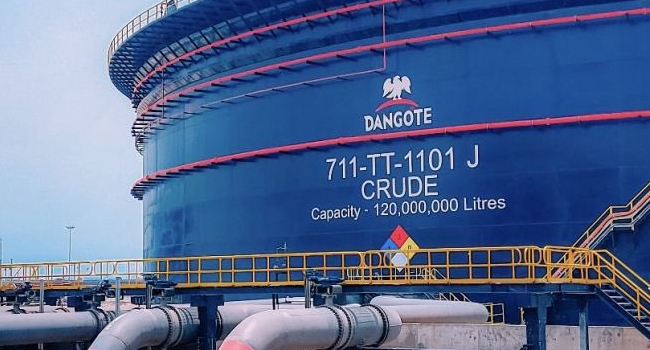
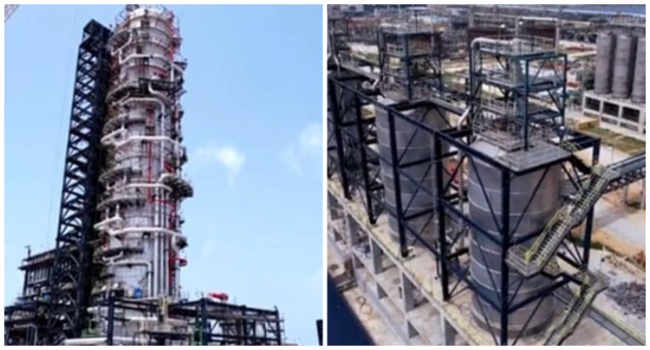
The Dangote Refinery and Petrochemical Project announced its early plans for the refinery in September 2013. President Muhammadu Buhari commissioned the project in Lagos State on May 22, 2023, seven days away from the baton handover to a new administration.
While the facility is expected to help curb fuel shortages in the country, Ogun, who was a guest on Channels Television Sunrise Daily on Monday, called for cautious optimism.
“We would save a lot of money from the importation of petroleum products, but again, ‘cautious optimism’ because it is a plant, we would not get 650,000 barrels a day from day one.
“It would be a very good thing, even if they start with 100, 200 (barrels), it would mean what we would be augmenting what they are producing from our importation,” he said.
The lawmaker stated that the Dangote Refinery may not be able to solve the Nigerian petroleum sector problem, adding that raised expectations may leave many to be disappointed.
“Dangote Refinery will not solve all our downstream problems, our fuel supply. The plant is a gigantic structure and to commission a plant like that means it must have been tested,
“And it takes a while to test a plant like that, to get it running before you commission it for production,” he said.
The former Chairman of the House Committee on FCT lamented that the NNPC and Dangote Refinery needed to be transparent about the functional testing and the expenses which have been pumped into the market before the commissioning.
“If the President is commissioning it today, it means they would have started production months before now. The NNPC Limited should be able to tell us that in the last three months, we have received this certain amount of petrol or diesel from this refinery.
“That is how plants are operated and commissioned, but it will be a good thing to keep the Dangote Refinery running.
“And most of us are excited and looking forward to that. Like people say, ‘You are not going to save too much money from it’ because it is actually the price of crude oil that determines the refined products,” he said.
Ogun added that “On a layman, even the shipping, even those vessels on the high sea that dollars are being paid to move back and forth, some of that will go.
“If we do that, it should ease the supply one, and secondly bring down the cost of importation and the cost of dispensing it at the pump to the ordinary Nigerian,” he said.