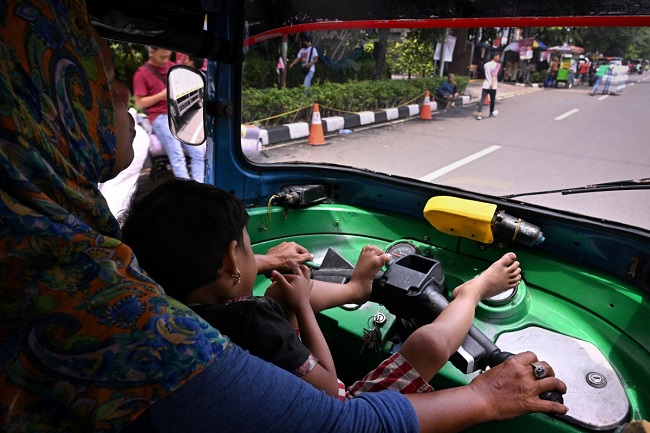
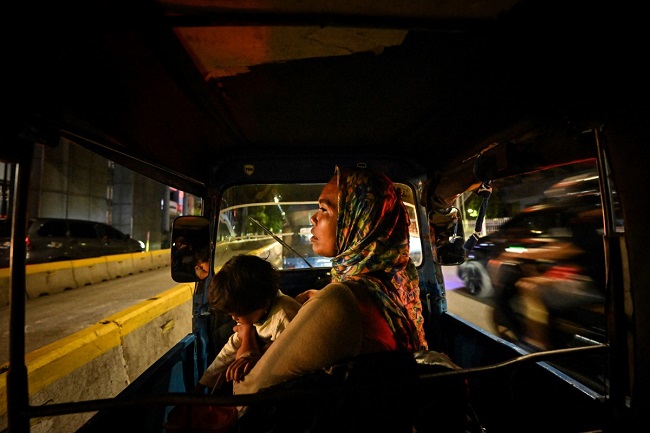
Her three-year-old daughter at her side, single mother Ekawati plies Jakarta’s notorious traffic in her three-wheeled autorickshaw, making ends meet as one of a growing number of Indonesian women seeking informal employment outside the home.
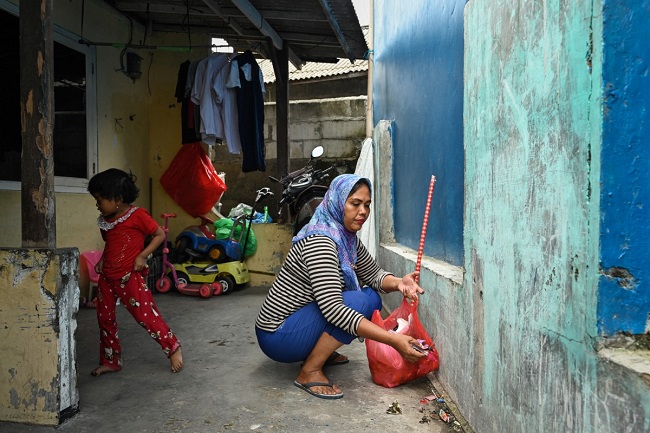
Not that Ekawati has much choice — after her first husband died and she divorced her second, it’s on her to pay rent and support her four kids, pulling in around 150,000 rupiah ($10) a day picking up fares outside the bustling textile hub of Tanah Abang Market.
At the same time, many Indonesian women have moved into informal employment in the service and agriculture sectors to support their families following a major reduction in official job prospects during the Covid years, according to the World Bank.
Ekawati’s second child passed away due to an illness, but she managed to send her son to an elementary school with assistance from the local government.
Now she is attempting to get similar aid for her other son who is in junior high.
“I have to drive this three-wheeler so I can give my children proper food, clothes and a house,” Ekawati said, tears in her eyes.
“I hope God gives me good health. I also hope my children will be successful, unlike myself.”