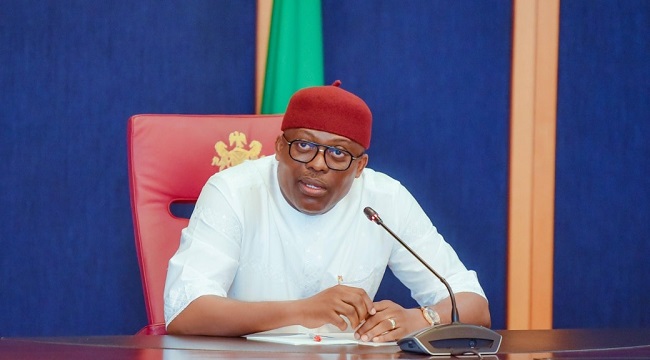
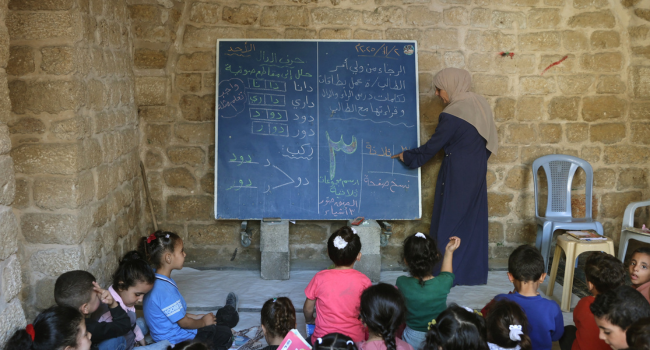
The Minister of State for Education, Suwaiba Ahmad, has provided further insight into the decision of the Federal Government to scrap the use of indigenous languages as a mode of teaching and learning in schools.
Ahmad said the decision was taken because the policy was not giving the desired results.
READ ALSO: Tinubu Approves ₦1.85bn For Education, Rehabilitation Of Rescued Chibok Girls
She, however, stated that the discontinuation was not a reflection of a lack of pride in the indigenous Nigerian cultures, but rather to enable children to fit in by knowing the official language –English.
“Nigeria has one official language, and our official language is English. So by the time a child is done with the mother tongue, the transition did not happen, they are still going to take national examinations in English, and then sometimes, they are going to compete for a job with others who have been taught,” she said on Channels Television’s The Morning Brief.
“When people argue, when people are criticising us for making this policy, I look at them and I am surprised. Have you been to the field? Have you gone to these classes? Have you really examined what is happening?
“And we came to say we are canceling that policy, we’re categorical that we are not arguing that mother tongue is ineffective, we are not arguing that, but the reality of the matter is our context. We are rich in cultural heritage. I’m proud of that, but our context will not allow that,” she added.
Teacher Training
The minister, however, said that the ministry has developed a training package for ensuring effective, foundational learning in literacy and numeracy.
“We are going to train the teachers in terms of how we effectively ensure that the learners learn literacy and numeracy — that they are able to read with appropriate text — so we are working on that.
“The curriculum is overloaded, loaded in regards to not only the number of subjects but also the content, and when the approach is more loaded, it focuses on just delivering the content rather than learners developing key skills and strategies of learning.
“We will reduce the subject overload to the most appropriate ones,” Ahmad added.
The Federal Executive Council had in 2022 approved a new National Language Policy making the various mother tongues compulsory medium of instruction from primary one to six.
It said that its implementation, though difficult, was necessary to promote the cultivation and use of all Nigerian languages.