While “oversabi”, loosely translated as “know-it-all” in Nigerian parlance, may be seen as a terrible habit, for filmmaker Toyin Abraham, it is a billion-naira blessing.
This week, her directorial debut, Oversabi Aunty, entered the history books, becoming the first of its kind to reach the ₦1 billion milestone at the box office.
“₦1 Billion+ at the box office. First Nollywood directorial debut to hit ₦1 billion. 4th-highest-grossing Nollywood film of all time. West Africa, this is a full celebration!!!” the film’s distributor, FilmOne, wrote on its X handle while announcing the Nollywood feat.
In what many have described as a pointer to Nigerians’ hunger for homegrown stories, she enters the elite tier of filmakers to have hit the billion-naira mark.
An excited Abraham expressed joy on reaching the milestone for the 2025 Nollywood comedy.
“My first directorial debut on the big screen. Oversabi Aunty to the world and still showing in cinemas near you,” the director wrote. “Thank you, God. Thank you, Toyintitans. Thank you, Nigerians. Thanks to my cast. Thanks to my crew. Thank you, FilmOne. Thank you, everyone. I’m short of words.”
The film, released in December 2025, highlights the story of an overzealous church usher whose constant interference in family matters resulted in chaotic and comedic impacts. Oversabi Aunty parades a star-studded cast such as Odunlade Adekola and Mike Ezuronye.
Following the Queen’s Pace?
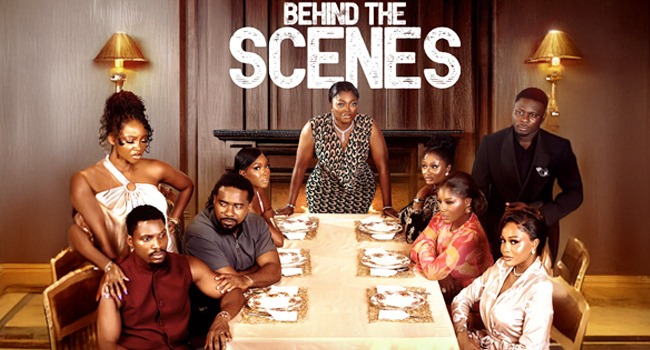
Abraham’s history-making film was not the first to hit that level. Led by Funke Akindele, whom many have dubbed the “Queen of the Box Office”, the Billionaire Club is only expanding. Akindele’s latest project, Behind the Scenes (BTS), broke its own records, reaching a staggering ₦2.4 billion at the Nigerian box office.
“This is also the highest-grossing Nollywood film of all time in Africa, the UK, and Ireland, and it makes Funke Akindele the first filmmaker to rank number one at the box office in Africa for three consecutive years,” FilmOne said about the film.
“This is now a movement, and we love to see it. From our hearts to yours, thank you for believing in the magic of storytelling and making history with us.”
Expectedly, Akindele, who began her career in her twenties, said the accolades are “milestones, not the mission”.
“From A Tribe Called Judah grossing ₦1B to Behind The Scenes crossing ₦2B and still counting, this is God in motion,” the 48-year-old wrote on her X handle.
“And I’m most grateful to my maker and return all the glory to him. The lesson remains unchanged: serve the story, respect the audience, refine the craft, and let the work earn its applause,” she added.
Foundation of Success
The box office record was the newest accolade for the filmmaker. Two years ago, A Tribe Called Judah reached over ₦1 billion less than one month after it was released.
Reflecting on that milestone, Akindele said the accomplishment was “huge” and deeply personal. “For the first time, I broke the record: the highest-grossing movie to hit ₦1bn. That is huge; I feel good about it.”
For Akindele, these recognitions did not come by luck. They are products of persistence for a career dating back to 1996, when she started out playing peripheral roles.
She said, “Then I got one big yes with I Need to Know, and that is how I got my first ₦1 million.”
A Maturing Industry
The recent box office successes show a growing industry which has built itself from the ground up, from the early days of low-budget, straight-to-video productions. Decades after films like Living in Bondage graced the screens, leading to a wave of movies incorporating local flavours with social issues, Nigeria’s cinema culture has made giant strides, pulling in millions of naira.
In 2025, West African cinemas grossed ₦15.6 billion, as 2.79 million people attended screenings in 122 cinemas, according to FilmOne Entertainment.
The distributor said sixteen films reached the ₦200 million threshold, and 14 Nollywood titles got over ₦100 million. FilmOne Entertainment said the average cost of a ticket was ₦5,596, numbers industry experts and observers said is a positive marker for Nigeria’s buoyant cinema culture.
The Federal Government praised Akindele’s strides, labelling it as a “big win”.
“From Lagos to Toronto, from cinemas in Abuja to theatres overseas — this movie had everyone locked in,” the National Orientation Agency (NOA) said in a statement on its social media handle.
“This big win solidifies the movie as the highest-grossing Nollywood film of all time in Africa, the UK, and Ireland, makes her the first filmmaker to rank number one at the box office in Africa for three consecutive years, while also proving that Nigerian stories are going global,” NOA wrote.
The Nigeria Film Corporation (NFC), the body in charge of regulation, promotion, and development of the country’s film industry, said that, “From an industry perspective, Behind The Scenes reflects a significant evolution in Nollywood’s commercial and artistic maturity.”
FG’s Commitment
To support the creative industry, the federal government last year launched the Creative Economy Development Fund (CEDF). According to the Ministry of Arts, Culture, Tourism and Creative Economy, the fund targets mature businesses requiring over $100,000.
“This is not just a financial intervention. It is a call to action for creatives, entrepreneurs, and industry enablers to scale their dreams and contribute to a thriving, inclusive creative economy,” the Minister of Culture, Tourism, and Creative Economy, Hannatu Musawa, said.
“CEDF offers various funding options for creative businesses, including affordable loans and credit facilities for businesses across sectors such as film, music, fashion, art, publishing, gaming, and cultural tourism,” the ministry wrote.
In the past, Nigerian authorities have given grants to filmmakers and creatives. As far back as 2010, the administration of President Goodluck Jonathan promised a $200 million grant for Nigeria’s entertainment industry.
Asake’s Record
While the movies dominate the screen, Nigerian singer Asake is making history on the airwaves.
The singer, born Ahmed Ololade in Lagos, is now the artiste with the most entries in the history of the Billboard U.S. Afrobeats Songs chart.
His hit “Jogodo” reached a record of 60 entries, mirroring the successes of Abraham and Akindele.
His 60 Billboard US Afrobeats Songs chart entries span solo releases, collaborations and features.
The accolade is seen as yet another successful collabo with compatriot Wizkid, an alliance that has continued to redefine Afrobeats on the global stage.
Whether it’s in the cinemas or on the airwaves, Nollywood and Afrobeats still remain one of Nigeria’s greatest exports, helping the country rewrite its stories.
The exponential growth of these industries only shows one thing: the world is listening to Nigeria and ready to hear its stories.