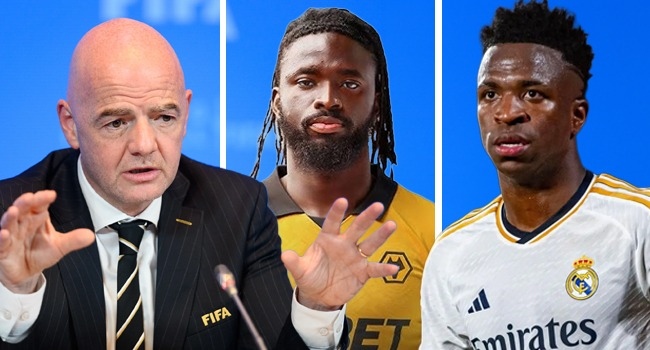
When Super Eagles’ Tolu Arokodare stepped up to take a penalty for Wolverhampton Wanderers against Crystal Palace, he was competing in one of the world’s biggest football leagues. He carried the hopes of millions of young people from Lagos.
While his club lost the points, his miss opened the floodgates of racial vitriol, showing that even in 2026, the “Beautiful Game” still has scars and a dark, ugly underbelly.
“It’s still unbelievable to me that we’re playing in a time where people have so much freedom to communicate such racism without any consequences,” the Nigerian striker wrote on his X handle after receiving several messages containing racial slurs.
“These individuals should have no place in our game, and collectively, we have to take action to punish everyone who taints the sport like this, no matter who they are.”
READ ALSO: Racism Reducing My Desire To Play Football – Vinicius
A Widespread Issue
It’s still unbelievable to me that we’re playing in a time where people have so much freedom to communicate such racism without any consequences.
These individuals should have no place in our game and collectively we have to take action to punish everyone who taints the sport… https://t.co/eIL2ZCYkaV
— T.e.a.7_ (@toluarokodare) February 22, 2026
Tolu’s experience is far from isolated. Across Europe, similar scenes have unfolded in recent weeks, with Black players reporting racial abuse—from social media attacks to chants inside stadiums.
Brazilian forward Vinícius Júnior was the subject of racial abuse during a Champions League clash against Benfica.
⏸️ HT: @slbenfica_en 0-0 @RealMadridEN pic.twitter.com/JaB3vmAFAC
— Real Madrid C.F. (@realmadriden) February 17, 2026
The Real Madrid star scored the winner but later reported being called ‘mono’—Spanish for ‘monkey’—following an exchange with Benfica’s Gianluca Prestianni. The incident forced a temporary halt to the match as officials intervened, a reminder of how racism can mar football’s biggest nights.
The 25-year-old forward was quick to hit out at “cowards”.
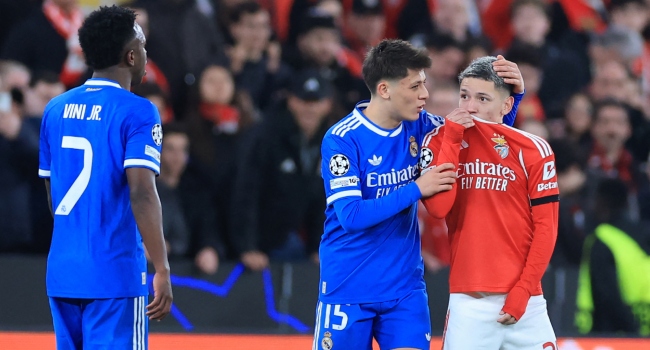
“Racists are, above all, cowards. They need to put their shirts over their mouths to show how weak they are,” Vinicius wrote on Instagram in reference to Prestianni having hidden his mouth with his jersey during the pair’s clash.
Both players are not alone. In recent weeks, players such as Chelsea’s Wesley Fofana and Burnley midfielder Hannibal Mejbri have also been subjected to racist abuse.
Both clubs issued statements swiftly condemning the incidents, calling them “completely unacceptable” and reaffirming their support for the players.
“Such behaviour is completely unacceptable and runs counter to the values of the game and everything we stand for as a club. There is no room for racism,” Chelsea said.
“The club continues to be unequivocal in its stance – we have a zero-tolerance approach to any form of discrimination,” Burnley wrote.
READ ALSO: UEFA Can Make Fight Against Racism More Than A Slogan, Says Real Madrid’s Arbeloa
Punishments and Fightback
Beyond club condemnations, players like Real Madrid’s Trent Alexander-Arnold have called the recent wave of racial abuses against footballers disgraceful.
“It’s disgusting. What’s happened tonight is a disgrace for football. It’s ruined the night for the team,” the England full-back said after the abuse suffered by Vinícius.
While players, clubs, and coaches have voiced out about the abuse of players, football governing bodies like FIFA and UEFA have repeatedly maintained that there is zero tolerance for racism. They have also ramped up efforts to address the menace.
Three years ago, UEFA rolled out its “European Football United Against Racism” policy.
It is part of moves targeted at addressing abuse of players, as the body maintained “that racism and other forms of discrimination must be kicked out of football, once and for all”.
The union recommended a slew of sanctions, including suspension of players, abandonment and forfeiture of matches, stadium closure, and fines, depending on the gravity of the incident.
“Any player or team official found guilty of racist conduct must be suspended for at least ten matches (or a corresponding period of time for club representatives),” a part of UEFA’s 11-point document read.
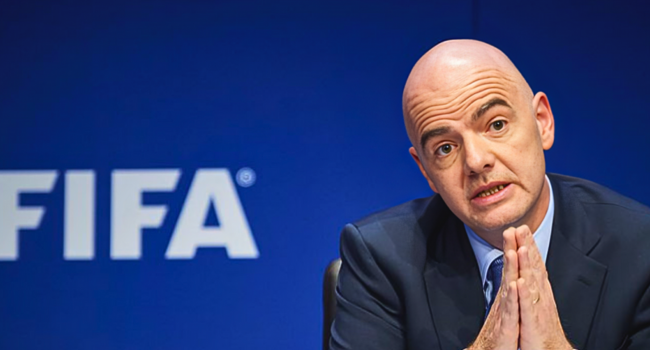
President Gianni Infantino was clear on FIFA’s stance against racism, which he called “unacceptable”.
“I repeat myself and will continue to do so. There is no place for racism in football,” Infantino said last August after racial abuse incidents during two German Cup fixtures.
Domestic leagues like the English Premier League are also taking action, introducing measures to identify and punish offenders.
In the past, some teams have paid hefty fines, faced stadium closure, and had points deductions due to fans’ or players’ racist behaviours.
About a year ago, the Scottish club Rangers were handed a €30,000 fine and stadium closure due to their fans’ display of racist banners during a Europa League match.
Players like the Czech defender Ondřej Kúdela, who got a 10-match ban in April 2021 for “racist behaviour” towards Rangers’ Glen Kamara, show that punishments can extend to footballers, just as they do to fans.
Italian club Lazio have been punished with fines and partial stadium closure over recurrent racial abuse by their fans. Real Valladolid supporters have also been given suspended prison terms for similar behaviours.
Despite these measures, racial abuses continue to make headlines across Europe and other parts of the world, raising concerns about whether punishments are strong and consistently enforced to deter offenders
For many in the game, a lot more needs to be done to stamp out racism.
“There is a lot of work still to do. It is in society; it is not just in football. Racism is everywhere,” Manchester City manager Pep Guardiola said.
Chelsea head coach Liam Rosenior echoed similar sentiments as Guardiola and said, “Any form of racism in society is unacceptable.” People need to be held accountable — on social media and in the press — to help stamp it out.”
Beyond Football
Our latest debutant. pic.twitter.com/B7LAOUbFZm
— Irish Rugby (@IrishRugby) February 14, 2026
Racial abuse is not only restricted to football. In rugby, athletes of Nigerian descent, like Ireland’s Edwin Edogbo, have also been racially abused.
The incident, which happened in early February, prompted the Irish Rugby Football Union to investigate the matter and disable comments on a post on its X account where it posted a photo of Edogbo holding his first cap.
English rugby captain Maro Itoje, who has a Nigerian heritage, called the situation “incredibly sad”.
“We have these incidents that happen, which are terribly sad, and they should be condemned with full force when they do happen,” he said.
“But what happened to Vinicius Junior…30 years ago that probably wouldn’t have even made the press? The referee would have told him to get on with it. His teammates probably would have said that to him.
“So, while the stuff we’re seeing, whether it’s Vinícius Júnior or Edwin Edogbo, is terribly sad, we as a community need to keep on stamping this type of thing out.
“But I do also believe that we are moving in somewhat the right direction, although moving in somewhat the right direction is not a given.”
Itoje’s comment suggests that the fight against racism in sports is a collective effort.
From players and fans speaking out against it to clubs and governing bodies enforcing rules, coordinated action will ensure that future generations can enjoy their favourite sports free from racial abuse.