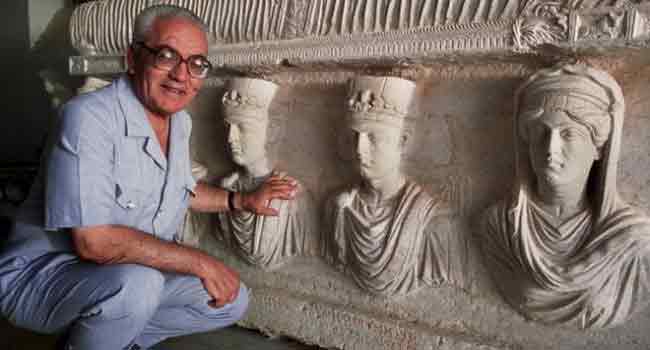
 Reports says the Archaeologist who looked after ancient ruins of Palmyra in Syria for 40 years has been killed by Islamic State (IS) militants.
Khaled al-Asaad had been held for about a month by the group, which seized the United Nations Educational, Scientific and Cultural Organization (UNESCO) World Heritage site in May.
The 81-year-old’s family informed Syria’s Director of Antiquities, Maamoun Abdul Karim, that he had been beheaded.
Mr Karim said IS militants had tried to extract information from Mr Assad about where some treasures were hidden.
He described Mr Asaad as “one of the most important pioneers in Syrian Archaeology in the 20th Century”.
The murder has been denounced as a “horrific act” by UNESCO, the UN cultural organisation.
Reports say the Director General of UNESCO, Irina Bokova, as saying “they killed him because he would not betray his deep commitment to Palmyra,” in a statement.
“His work will live on far beyond the reach of these extremists,” she said. “They murdered a great man, but they will never silence history.”
IS has demolished several ancient sites in Iraq, and there are fears that it will destroy Palmyra, one of the Archaeological jewels of the Middle East.