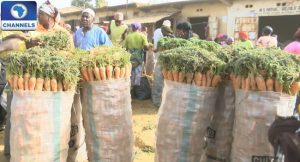
 The availability and effective use of improved seeds are the most important requirements for the success of crop productivity and achievement of food security in any nation.
While the Nigerian government has continued to push for diversification of the nation’s economy through agriculture and other untapped sectors, the need to ensure that farmers [both large scale and small scale] get improved seeds that will increase yield is equally vital.
Boost Crop Productivity
According to the Director General of the National Agricultural Seeds Council, Dr. Olusegun Ojo, Nigeria can only become less import dependent when Nigerian farmers adopt the use of improved seeds.
Addressing a meeting in Abuja over the weekend, Dr. Ojo said that while the nation’s economy is in recession, farmers could leverage on improved seeds to boost crop productivity, create jobs and improve their income.
If there is any time the nation needs to grow its Gross Domestic Product (GDP), it is now. The nation’s GDP had contracted in the second quarter by 2.06%, according to a report published by the National Bureau of Statistics.
This drop had officially dragged the nation’s economy that is largely dependent on crude oil sales into recession, the worst that has been witnessed in over two decades.
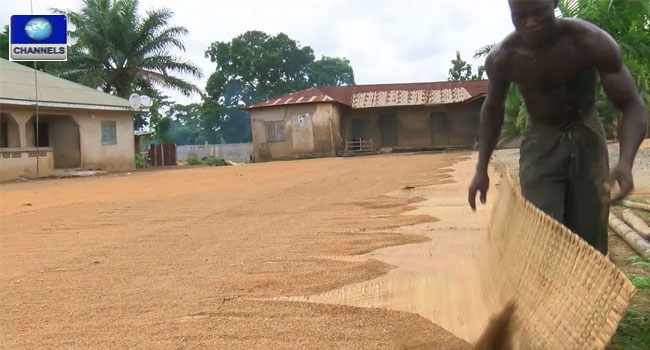
The economic recession has resulted in the loss of jobs, poor return on investment and less activities in the socio-economic sector, but agriculture experts believe that now is the time to embrace the use of high quality seeds to improve the quality of agricultural produce by farmers.
Agriculture that the government is pushing for more involvement of young Nigerians that are without jobs, due to high rate of unemployment, is only contributing 24.18%, according to the Central Bank of Nigeria.
This percentage is relatively low for a nation that had sustained its economy with agriculture prior to the discovery of crude oil.
The National Agricultural Seeds Council, however, believes that the tide could turn, if farmers would embrace the use of improved seeds.
It says crop yield will increase, thereby boosting the economy with its income generation capacity while creating jobs for seed producers and distributors.
Seed Tracking System
Nigeria is blessed with arable land that could help lift its people out of poverty, but despite the huge potential improved seeds hold for crop yield, its distribution systems in Nigeria is poorly developed.
While the Council is promoting improved seeds usage, the challenge for small scale farmers, which are more in Nigeria, is that they cannot afford the cost of the high yielding seeds which usually comes in large quantity.
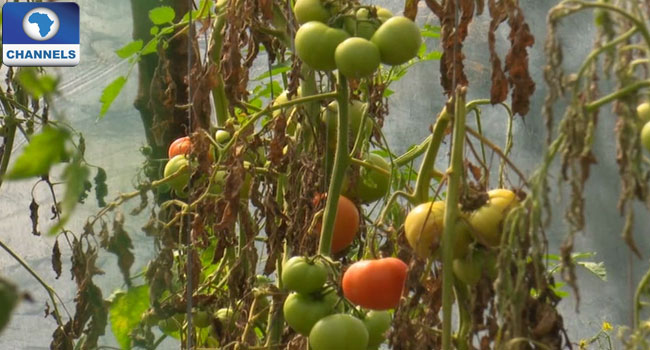
They need small amount of such seeds to plant but they are not usually available in such small amount, a situation that should be addressed.
To improve distribution of improved seedlings, Dr. Ojo said the council was looking at a seed tracking system.
The latest technology would be deployed first in the tracking of cassava seeds. He says it will help in checking the spread of fake cassava seeds that do not yield much.
On the part of the government, an Anchor Borrowers Programme has been launched under the control of the Central Bank of Nigeria, aimed at providing farmers with credit facility. This targets youths’ involvement in farming to reduce unemployment rate.
The programme has been launched in different states, but how accessible the programme is will be seen in the contribution of agriculture to the nation’s GDP in the next few quarters’ report.
While the gains of adopting the use of improved seeds in Nigeria is also said to be key in boosting food production and making Nigeria less import dependent, it remains to be seen if Nigerian farmers will key into this lofty idea in the interest of the nation’s socio-economic development.