The U.S. Soybean Export Council (USSEC) and the U.S. Mission in Nigeria are partnering with Nigerian companies to increase trade and supply, thereby bridging the country’s protein gap.
A statement by the U.S. Soybean Export Council said its signature “Nigeria: NOW” conference held in Lagos last week brought together stakeholders across the government and private sectors, including poultry producers, nutritionists, and more.
USSEC stated that with a population of over 236 million and growing, Nigeria’s protein consumption per capita remains low at only 45.4 grams per person per day compared to the FAO’s minimum recommended intake of 60 grams. The global average is around 64 grams.
Speaking at the event, Acting U.S. Consul General, Lagos, Nigeria, JoEllen Gorg noted that “The U.S. Soybean Export Council’s Nigeria: NOW conference marks a pivotal milestone in creating a pathway for mutual prosperity and shared economic success. By addressing Nigeria’s protein gap, fostering innovation, and promoting best practices, the U.S. Soy industry is helping to build a resilient agricultural sector in Nigeria, ensuring long-term food security and economic stability.”
According to Gorg, the collaboration between USSEC and the US mission in Nigeria is critical in helping export-ready U.S. companies build business relationships with Nigerian agribusinesses and promote the use of U.S. soy in Nigeria’s feed and food industries.
READ ALSO: NELFUND Warns Students Against Fake Online Loan Portal
She said, “We are enthusiastic about the opportunities arising from the collaboration between USSEC and the U.S. Mission in Nigeria. This partnership is crucial in helping export-ready U.S. companies build business relationships with Nigerian agribusinesses, training Nigerians in new agricultural practices, and promoting the use of U.S. soy in Nigeria’s feed and food industries.”
Participation by high-level Nigerian stakeholders, including former President, Chief Olusegun Obasanjo, Grand Commander of the Order of the Federal Republic, Engr. Seyi Makinde, Executive Governor of Oyo State, and Abisola Olusanya, Commissioner for Agriculture & Food System, Lagos State, emphasised the opportunity for greater collaboration between U.S. Soy and Nigeria.
USSEC CEO, Jim Sutter, added, “Trade is vital to the global economy and, more importantly, to local economies. U.S. Soy is at the forefront of collaborating with its partners as a reliable supplier.”
Robert Alpers, a generational U.S. Soy farmer and United Soybean Director, echoed this, “I’m proud to be playing my role in helping to feed the world sustainably. As U.S. Soy farmers, we are committed to ensuring we produce more using fewer resources and reducing our environmental footprint.”
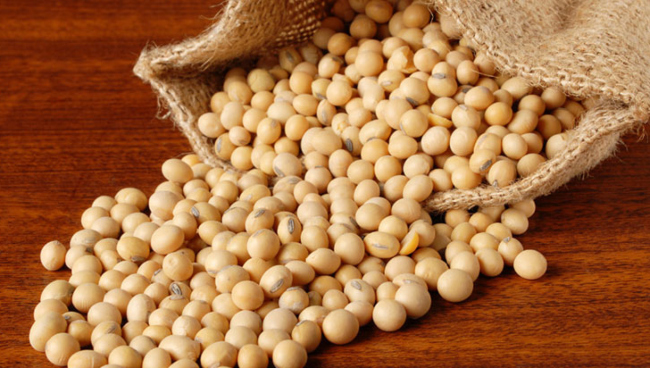
Although Nigeria grows soybeans domestically, demand significantly outweighs supply. The USDA Foreign Agricultural Service estimated Nigeria’s local production at around 1.15 million metric tons for the marketing year (MY) 2023/24, with the animal feed sector accounting for the majority of its use.
As a result of the demand-supply mismatch this year, Nigeria imported 62,100 metric tons of soybeans from the U.S. after a pause of six years.