For nearly two decades, Nigeria’s public university system has existed in a state of suspended certainty—never fully open, never fully closed. Each strike by the Academic Staff Union of Universities (ASUU) emptied campuses, fractured academic calendars, and reinforced a national sense of déjà vu: agreements signed, hopes raised, promises broken.
Students were the most visible casualties. Parents watched helplessly as degrees stretched far beyond their allotted years, while lecturers and government officials traded accusations. Over time, the strikes became more than industrial actions; they evolved into a structural feature of Nigeria’s higher education landscape.
In 2026, however, a renegotiated agreement between ASUU and the Federal Government is being presented as a potential break from that cycle.
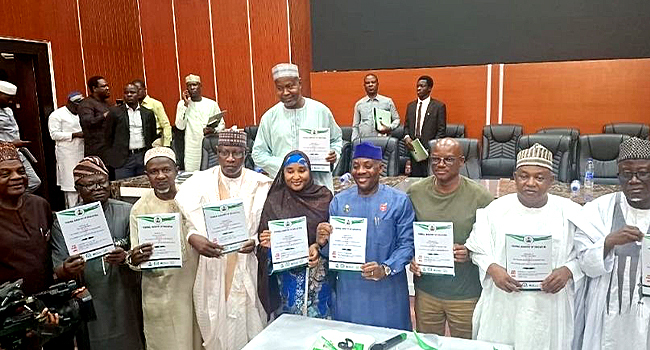
Sixteen years after the controversial 2009 pact, both sides have signed what officials describe as a new deal aimed at stabilising the university system. Whether it succeeds will determine not just industrial peace, but the future credibility and competitiveness of Nigerian universities.
What New Deal Promises
At the centre of the agreement is a 40 per cent upward review of emoluments for university academic staff, a move the government says will improve morale, productivity, and staff retention. Under the new structure, academic pay will consist of the Consolidated Research and Allied Institutions Salary Structure (CONRAISS) alongside a consolidated academic tools allowance, which accounts for the 40 per cent increase and is exclusive to university lecturers.
The deal also introduces a new professorial cadre allowance for full-time professors and senior academic leaders—an incentive the government says recognises the administrative, research, and mentoring burden borne by senior scholars.
“For the first time, the Federal Government has approved a new professorial cadre allowance that applies to senior academics at the level of full-time professors and leaders in our tertiary institutions,” Minister of Education Tunji Alausa said at the signing ceremony in Abuja.
“These allowances apply strictly to full-time professors and leaders. This approval recognises the significant workload and responsibilities associated with academic leadership.”
Government officials argue that the package reflects President Bola Tinubu’s commitment to restoring uninterrupted academic calendars and repositioning public universities as engines of national development.
Implications For Nigerian Universities
If implemented fully, the agreement could have far-reaching consequences. Improved remuneration may slow the exodus of Nigerian academics to foreign institutions, particularly at a time when universities across Africa, Europe, and the Middle East actively recruit Nigerian scholars. More stable staffing could translate into stronger research continuity, better postgraduate supervision, and improved teaching quality.
Equally important is the symbolic value of implementation. For universities battered by years of uncertainty, predictability is as critical as funding. A stable calendar would allow institutions to plan admissions, research cycles, international collaborations, and accreditation exercises with confidence—something that has been nearly impossible during prolonged strike cycles.
Yet these gains remain conditional. ASUU’s cautious response underscores a deep institutional mistrust shaped by history.
Cautious Optimism From ASUU
ASUU President Christopher Piwuna described the agreement as a hard-won milestone, but warned against premature celebration.
“The struggle for renegotiation led to multiple committees—from Wale Babalakin in 2017 to Munzali Jibrin in 2021 and Nimi Briggs in 2022—none of which produced a binding collective bargaining agreement,” he recalled.
“We are optimistic that this agreement will be implemented in totality, but there is also pessimism, given our history with the government and the poverty of sincerity.”
His remarks reflect a broader concern within universities: that failure to implement the deal would simply reset the countdown to the next strike.
The Shadow Of 2009 Agreement
The 2009 ASUU–FG agreement was once celebrated as a blueprint for revitalising Nigerian universities. It promised upgraded infrastructure, improved funding, earned allowances, pension reforms, and greater institutional autonomy.
Crucially, it included a provision for renegotiation every three years.
Instead, it became the fault line of recurring disputes. From the five-month strike in 2010 to the nine-month shutdown in 2020, lecturers repeatedly accused successive governments of defaulting. The result was institutional paralysis—graduations delayed, research abandoned, and international credibility eroded.
Even as recently as October 2025, ASUU embarked on a two-week warning strike, citing the government’s failure to conclude renegotiation of the 2009 agreement, underscoring how deeply unresolved issues continued to shape university life.
IPPIS, Fragmentation, Funding Gaps
The 2020 strike, the longest in Nigeria’s university history, was intensified by the government’s insistence on enrolling lecturers on the Integrated Payroll and Personnel Information System (IPPIS). ASUU argued that IPPIS was incompatible with the flexible and research-driven nature of university work. The COVID-19 pandemic only exposed how fragile the system had become.
In 2023, the government formally recognised two breakaway unions—CONUA and NAMDA—a move widely interpreted within universities as an attempt to weaken ASUU’s dominance. While ₦50 billion was released in April 2025 to settle earned allowances, the gesture failed to address deeper structural disputes, and strikes persisted.
Global Rankings, Institutional Decline
The impact of prolonged instability is visible in global university rankings. In the Times Higher Education 2026 rankings, Ahmadu Bello University, University of Lagos, and the University of Nigeria, Nsukka, all sit outside the top 1,000 globally.
While research quality scores remain relatively strong, teaching and research environment indicators lag significantly—reflecting chronic underfunding and infrastructure decay.
For Nigerian universities, these rankings are more than reputational metrics; they affect international partnerships, research grants, staff recruitment, and student mobility. Without sustained investment and stability, climbing the global ladder was unlikely.
Students have borne the brunt of decades of disruption. Academic sessions collapsed, National Youth Service Corps timelines shifted, and early career plans stalled. In 2022, NANS protests across several states captured widespread frustration.
“If Nigerian students are at home, the offices of the Ministers of Education and Labour cannot be opened,” then-NANS President Sunday Asefon warned.
Their message was clear: industrial disputes in universities have consequences far beyond the campuses.
A Test of Sincerity
Government officials insist the 2026 agreement marks a turning point. Minister of Labour Mohammed Dingyadi said faithful execution would “restore confidence among students, parents, and the wider Nigerian public.” Senate Committee Chairman on Tertiary Institutions, Senator Muntari Dandutse, framed the deal as “a commitment to our children, our academia, and our national destiny.”
For Nigerian universities, the agreement is more than a labour settlement. It is a test of whether the state can finally provide the consistency required for institutions to thrive. If honoured, it could stabilise campuses, rebuild trust, and begin reversing years of decline. If not, it risks becoming yet another chapter in a long history of broken promises.
In the end, stakeholders believe that the future of Nigeria’s universities will not be determined by the signatures appended in Abuja, but by whether those promises are implemented, fully, faithfully, and without delay.