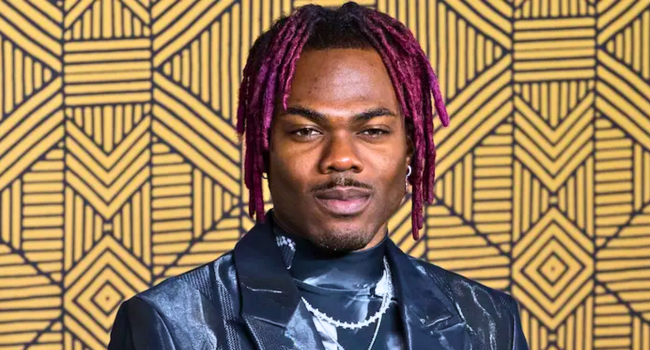
Nigerian singer and songwriter CKay has criticised the popularised use of the term “Afrobeats,” describing it as a “convenient” but overly general label that fails to capture the diversity of sounds emerging from across Africa.
The ‘Love Nwantiti’ hitmaker reflected on how the global popularity of African music has also led to what he believes is an oversimplified categorisation of the continent’s musical identity.
According to the Kaduna-born singer, while the term has helped introduce African music to international audiences, it does not accurately represent the variety of styles, cultures and influences that shape the continent’s soundscape.
“Afrobeats is a convenient term. I won’t say I love the term. I think over time I started to see the effects of that overgeneralisation,” he told African Voices.
The singer, who was honoured at the 2021 Brit Awards, explained that grouping all African music under a single label is comparable to describing all Western music under one generic category.
“It’s kind of like the way you can’t just call Western music white music or American beats or European beats, you know?
“There’s rock, there’s jazz, there’s dancehall, there’s all kinds of stuff, all kinds of sounds. So that’s the same way I feel about African music,” he said.
Africa’s Musical Diversity
The “Emiliana” crooner further stressed that Africa’s cultural diversity makes it difficult to summarise the continent’s music with a single term.
With more than 50 countries and countless ethnic groups, he noted that African music pictures a wide spectrum of traditions, instruments and pattern.
“I feel Africa has over 50 countries, more than 50 cultures. Nigeria alone has over 36 ethnic groups with different languages, food, music, and rhythms.
“With the music, they also have their own instruments. So coming to a whole continent and just calling everything Afrobeats, you know, if you think about that, it’s not the most apt,” the 30-year-old said.

Despite his reservations, CKay acknowledged that the term may still serve as an introductory gateway for global listeners who are just beginning to explore African sounds.
“I think for the Western world, it’s a start, to help them understand African music and obviously, when people learn more, they’ll probably learn about the different subgenres,” he added.
Not The Only Artiste
CKay is not alone in questioning the widespread use of the Afrobeats label.
Several prominent Nigerian artistes have previously expressed reservations about the term, arguing that it often oversimplifies the variety of sounds produced across Africa.
Grammy-winning singer Burna Boy has been among the most vocal critics. The artist, whose music blends reggae, dancehall, hip-hop and pop influences, has repeatedly stated that he prefers the description “Afro-fusion” for his sound.
According to Burna Boy, labelling all African music as Afrobeats risks overlooking other genres such as highlife, fuji and kwaito.
Although his remarks previously sparked debate online, he clarified in 2023 that he was not trying to dismiss the genre but rather emphasise the diversity within African music.
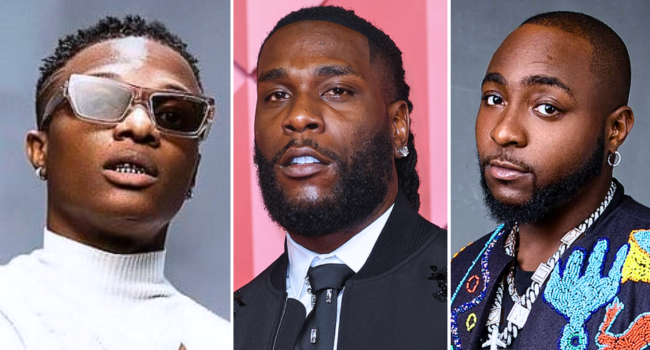
Similarly, global music star Wizkid has pushed back against being described solely as an Afrobeats artiste.
The singer has argued that the term places African musicians into a restrictive box, insisting that his music spans multiple styles including R&B, Afropop and international pop.
“I make all sorts of music,” Wizkid once said when asked about the label.
Award-winning singer Davido has also acknowledged the commercial advantage of the Afrobeats brand globally but has suggested that his music is better described as Afrofusion due to its blend of influences.
More recently, singer Omah Lay sparked debate after suggesting that the current Afrobeats narrative is heavily Lagos-centric and does not fully reflect the musical diversity across Nigeria and the wider African continent.
Veteran rapper Ruggedman has also criticised what he sees as declining lyrical depth in some modern Afrobeats releases, arguing that the industry should prioritise quality and substance rather than focusing solely on labels.
However, Joeboy recently said he believes the genre is going through “a purge” and returning to its roots.
The global rise of Afrobeats traces its lineage to the ‘Afrobeat’ movement pioneered by Fela Kuti, whose politically charged fusion of jazz and highlife laid the cultural foundation for today’s modern pop sound.
Over the years, the genre has evolved into a global export championed by acts such as D’banj, Timaya, Wizkid, Davido and Tiwa Savage.
A newer generation, including Tems, Burna Boy, Rema, Asake and Ayra Starr, has further expanded its reach under the “Afrobeats to the World” movement, earning international recognition and major award wins.
“Emo-Afrobeats” Sound
While the debate around the term Afrobeats continues, CKay has been busy carving out his own lane by experimenting with different sounds.
The singer is widely credited as a pioneer of what he calls “Emo-Afrobeats,” a style that combines emotional songwriting with the familiar rhythms of Afrobeats.
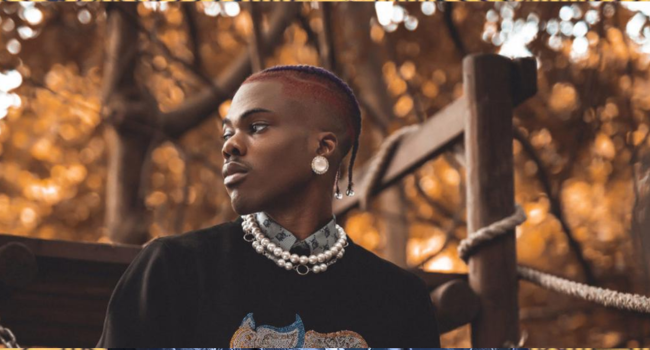
Artistes like CKay and Omah Lay have helped popularise the style, which often explores themes of heartbreak, complicated relationships and vulnerability, giving Afrobeats a more reflective and emotional edge.
Explaining the sound, he said the genre relies on melodic and atmospheric elements.
“Using emotional chords, minor scales a lot, very warm ambient synthesisers and instruments like guitars, electric or acoustic, keyboards, all these things together with very poetic, deep and emotional lyrics give you Emo-Afrobeats,” he said during the interview with journalist Larry Madowo.
“Love Nwantiti”
CKay first achieved worldwide recognition with his 2019 track Love Nwantiti, which became a viral sensation during the COVID-19 pandemic after fans began using its instrumental chorus in social media videos.
The song went on to top the inaugural Billboard Afrobeats Songs chart in April 2022 and spent more than 52 weeks on the Billboard Hot 100, peaking at number three.
Its success reached another milestone in December 2025 when the track surpassed one billion streams on Spotify, making CKay the first Nigerian solo artist to reach the landmark on the platform.
Reflecting on the achievement, the singer admitted that the scale of the song’s success exceeded his expectations.
“I knew it would be successful, but I just didn’t know it would be that successful,” he said. “I would say the scale of the success was something that came as a very pleasant surprise.”
At 30, CKay says he remains focused on pushing creative boundaries while contributing to the evolution of African music.
The singer believes consistency and innovation are essential to shaping the next chapter of the continent’s global musical influence.
“I think consistency and being committed to the journey is key. I try to create trends, not follow them. I try to create sounds, not copy them.
“I try to build on the legacy and history of what our ancestors made and take it to the next level. I want to be remembered as someone who innovated the sound, advanced the culture, and made the world a better place than I met it,” he said.