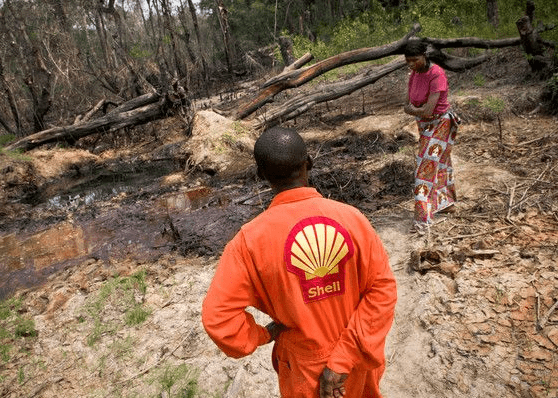
 Shell Pretroleum Development Company has denied allegations leveled against it by Amnesty International and the Centre for Environment, Human Rights and Development (CEHRD).
In a statement sent to Channels Television, Shell described the accusations as “unsubstantiated” and said it seeks “to bring greater transparency and independent oversight to the issue of oil spills” in Nigeria.
SPDC expressed regret that “some NGO’s continue to take a campaigning approach rather than focusing on on-the-ground solutions that bring societal benefits.”
“SPDC firmly rejects unsubstantiated assertions that they have exaggerated the impact of crude oil theft and sabotage to distract attention from operational performance. We seek to bring greater transparency and independent oversight to the issue of oil spills, and will continue to find ways to enhance this.
These efforts include publishing spill data online since January 2011 and working with Bureau Veritas, an independent third party, to find ways to improve the immediate response to a spill.
Amnesty International also claimed that Shell acts as both “judge and jury” during oil spill investigations as Nigeria’s “regulatory agencies have little oversight or control of the process and are dependent on the oil companies to carry out investigations.”
Shell debunked the claim and emphasised that “the joint investigation process is a federal process that SPDC cannot unilaterally change, involving as it does representatives of regulatory bodies, the Ministry of Environment, the Nigerian Police Force, State Government and impacted communities.”
A report by a US oil pipeline specialist Accufacts, had revealed that several cases of oil spillage had been wrongly attributed to sabotage in order to avoid compensating communities affected by the spillage caused by “corrosion, poor maintenance of oil infrastructure and equipment failure as well as sabotage and theft of oil.”
However, Shell’s statement disclosed that “a recent Chatham House report highlighted that an average of 100,000 barrels of oil were stolen each day in the first quarter of 2013, costing the Nigerian government and its people billions in lost revenue.”
“Solutions to the terrible tragedy of oil pollution in the Niger Delta need to be found,” Shell stated, adding that “crude theft continues to affect people, the environment and the economy.”
Coordinated action from the industry, government, security forces, civil society and others is needed to end this criminality, which remains the main cause of oil pollution in the Delta today, Shell said.