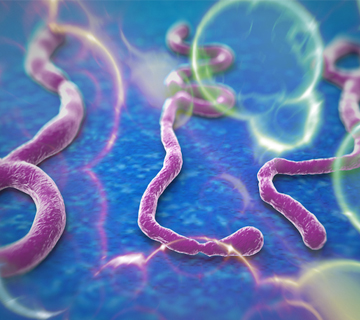
 A group of scientists say they have discovered how the lethal Ebola virus blocks and disables the body’s ability to battle infections in a discovery that should help the search for potential cures and vaccines.
United States scientists, found that Ebola carries a protein called VP24 which interferes with a molecule called interferon that is vital to the immune response. One of the scientists, Chris Basler, from Icahn School of Medicine at Mount Sinai, New York, who worked on the study, said that the Ebola Virus disrupts the body’s immune system.
“One of the key reasons that Ebola virus is so deadly is because it disrupts the body’s immune response to the infection.
“Figuring out how VP24 promotes this disruption will suggest new ways to defeat the virus”, he added.
The team, led by Gaya Amarasinghe from Washington University School of Medicine, found that VP24 works by stopping something called “transcription factor STAT1”, which carries interferon’s antiviral message from entering the nucleus of a cell and initiating an immune response.
“This study shows just how nefarious the Ebola virus can be,” said Ben Neuman, a virologist at Britain’s University of Reading, who was not directly involved in the study.
“Ebola virus carries a small tool that intercepts the cell’s distress signals, and when this happens, it disables some of the most useful machinery that our bodies have for fighting Ebola.
“That leaves the body with only crude defences that are less effective at stopping the virus, and end up causing much of the damage that can eventually lead to death.”
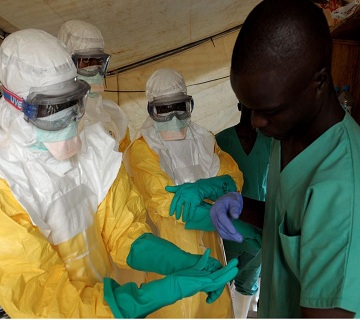
Ebola is one of the most deadly diseases known in humans and has a case fatality rate of up to 90 percent. In the current epidemic in West Africa, the virus has infected more than 1,800 people. So far, 1,013 of these have died with the vast majority in Guinea, Liberia and Sierra Leone.