President Bola Tinubu on Wednesday ordered a review of deductions and revenue retentions by the Nigerian National Petroleum Company Limited (NNPCL) and other major revenue-generating agencies in the country, to boost public savings, improve spending efficiency, and unlock resources for growth.
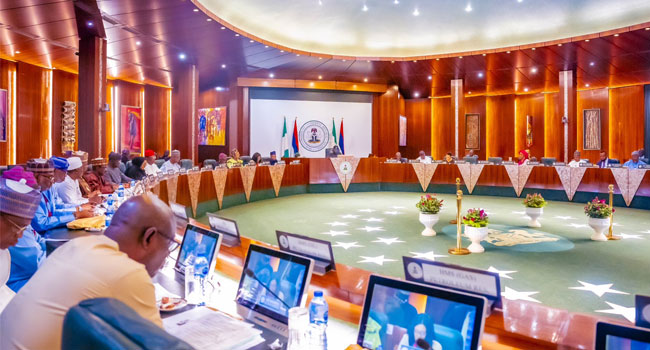
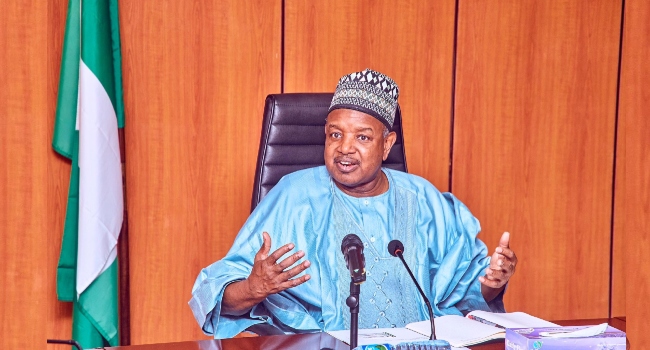
Minister of Finance and Coordinating Minister of the Economy, Wale Edun, made the directive public while speaking to newsmen after the Federal Executive Council meeting at Council Chambers, State House, Abuja, which was presided over by the president.
The directive applied to not just NNPCL, but also the Federal Inland Revenue Service (FIRS), Nigeria Customs Service, Nigerian Upstream Petroleum Regulatory Commission (NUPRC), and Nigerian Maritime Administration and Safety Agency (NIMASA).
Tinubu specifically called for a reassessment of NNPCL’s 30 per cent management fee and 30 per cent frontier exploration deduction under the Petroleum Industry Act (PIA).
The president tasked the Economic Management Team, led by Edun, to present actionable recommendations to FEC on the best way forward.
Tinubu said the directive was part of efforts to sustain reforms that had dismantled economic distortions, restored policy credibility, enhanced resilience, and bolstered investors’ confidence.
According to him, the reforms have created a transparent and competitive business environment attractive to local and foreign investors in critical sectors, such as infrastructure, oil and gas, health, and manufacturing.
FG Targets 7% Annual Growth
Tinubu noted that Nigeria’s goal of $1 trillion economy by 2030 required growth of at least seven per cent annually from 2027.
He described the target as “not just economic, but a moral imperative,” as higher growth was the surest way to tackle poverty.
He cited the July 2025 International Monetary Fund (IMF) Article IV report, which he said endorsed Nigeria’s economic trajectory and the need for investment-led growth.
READ ALSO: NIMC Upgrades Diaspora NIN Enrollment Platform, Onboards Partners
Reaffirming the Renewed Hope Agenda, Tinubu said Nigeria’s goal of $1 trillion economy by 2030 required growth of at least seven per cent annually from 2027, a target he described as “not just economic, but a moral imperative”, as higher growth is the surest path to tackling poverty.
He cited the July 2025 International Monetary Fund (IMF) Article IV report, which he said endorsed Nigeria’s economic trajectory and the need for investment-led growth.
Emphasising grassroots empowerment, the president pointed to the Renewed Hope Ward Development Programme, a ward-based initiative covering all 8,809 wards across the country. The programme is designed to lift economically active citizens through micro-level poverty reduction strategies in collaboration with states, local governments, and private partners.
He stated that public investment accounted for just five per cent of the country’s Gross Domestic Product (GDP) due to low savings, stressing that optimising “every available naira” is vital, especially under current global liquidity constraints.
Shedding more light on the president’s directive, Edun said macro-economic indicators were improving, with a more stable exchange rate, easing inflation, rising revenues, and debt-to-GDP ratios now within range.
He described savings as the foundation of investment and said the president’s directive aimed to quickly raise public sector savings by reviewing deductions and retention practices.
Edun further stated that he presented two memoranda before Wednesday’s FEC meeting — a $125 million Islamic Development Bank financing for infrastructure in Abia State, covering 35 kilometres of roads in Umuahia and 126 kilometres in Aba; and a plan to refinance N4 trillion in outstanding electricity sector obligations.
According to him, the electricity debt resolution will be executed in phases, with the first phase expected within three to four weeks under the coordination of the Debt Management Office and other agencies.